
Resource Hubs: For more on funded company intelligence and decision-maker data, browse the Growth List database of recently funded startups, or read our other features on milestone moments in science and technology.
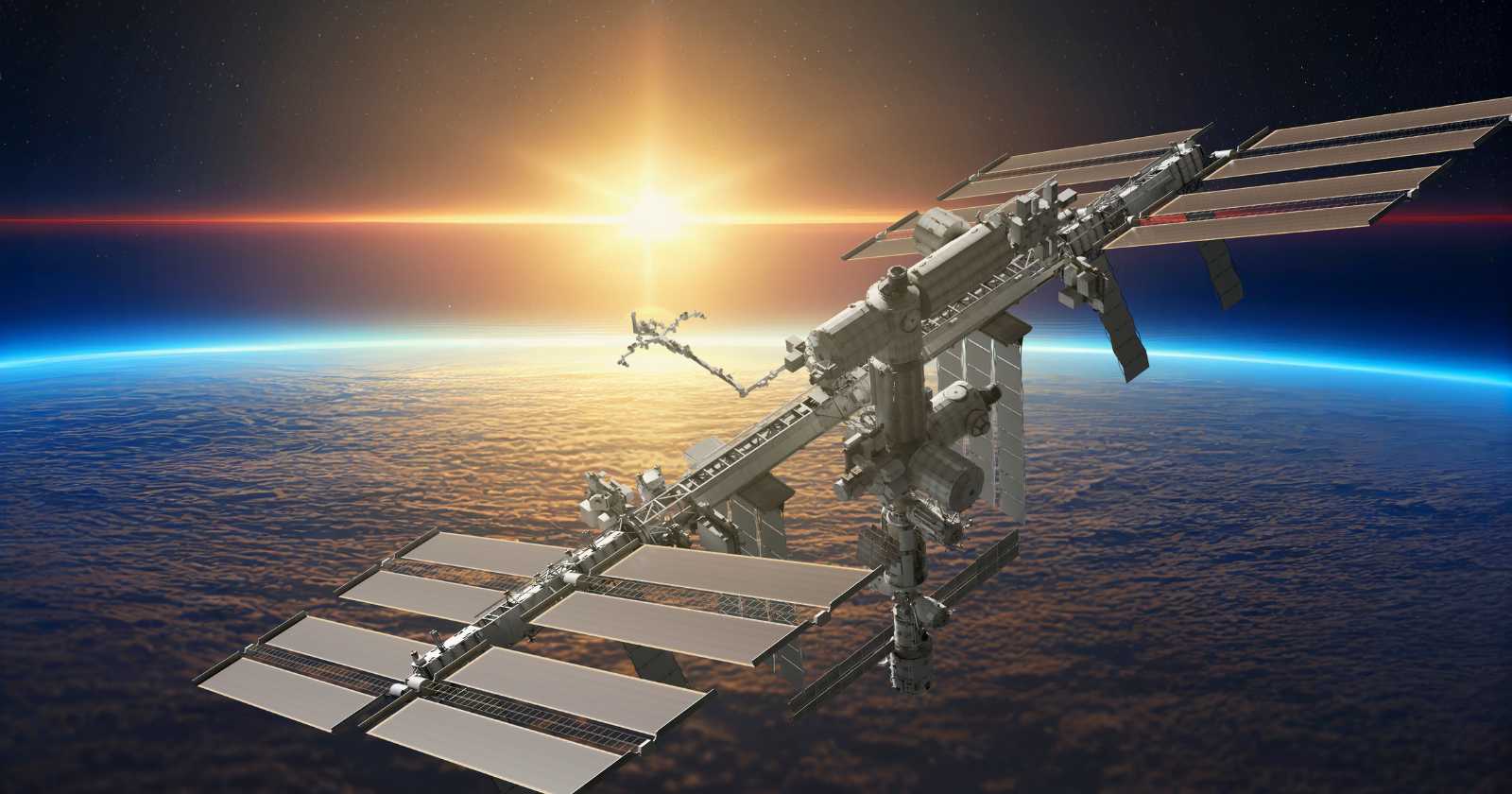
Christina Koch and Jessica Meir clipped their tethers to the outside of the International Space Station in October 2019 and floated into vacuum together to replace a failed battery charge-discharge unit on the P6 truss. The walk lasted several hours. It was the first spacewalk in the history of human spaceflight in which no man went outside. The streak it broke had been running, unbroken, since Soviet cosmonaut Alexei Leonov opened the hatch of Voskhod 2 in March 1965 and became the first human to stand in open space.
More than fifty-four years. That is how long the gap was between the first spacewalk and the first one performed only by women. The number is not just a curiosity. It is the measurement of how long an entire category of human achievement had a man’s silhouette stamped on it by default — and what it took to peel that silhouette off.
The number gets stranger when you set it next to Yuri Gagarin. On 12 April 1961, Gagarin lifted off from the Baikonur Cosmodrome aboard Vostok 1, orbited the Earth once, and ejected from his capsule above a field southwest of the Russian city of Engels. According to contemporary accounts, the farm workers who watched his parachute land backed away in fear until he told them, “Don’t be afraid. I am a Soviet like you, who has descended from space.” Gagarin flew alone. From that moment to the moment Koch and Meir floated out of the airlock was more than fifty-eight years.
The streak that nobody planned
No one in 1965 sat down and decided spacewalks would be a men-only activity for half a century. The streak happened because the underlying selection pipelines were almost entirely male, and the women who did break through arrived in ones and twos, rarely on the same crew at the same time, almost never trained on the same EVA hardware in the same window.
Svetlana Savitskaya became the first woman to perform a spacewalk in July 1984, working outside Salyut 7 with cosmonaut Vladimir Dzhanibekov. Kathryn Sullivan followed her several months later, in October 1984, working outside Challenger with Dave Leestma. Both walks were mixed crews. So was every spacewalk that came after, for the next thirty-five years.
By the time Koch and Meir went out, hundreds of individuals had performed at least one spacewalk. A small fraction of them were women.
The walk that almost wasn’t
The first attempt at an all-female EVA had been scheduled for March 2019, with Koch and Anne McClain. NASA cancelled it days before. The station had only one medium-sized hard upper torso suit configured and ready, and both women needed that size. McClain had trained in a large during ground simulations but found the medium fit better in microgravity. There was not enough time to reconfigure a second medium before the EVA window closed.
The cancellation became a small international incident. It sparked media criticism that NASA lacked sufficient spacesuits configured for women, though the issue was more specifically about assembly time constraints. Either way, it was an emblem of the wider problem: the hardware, the schedules, and the training rotations had been built around an assumption about who would be wearing the suit. The agency rescheduled. Koch stayed up. Meir arrived in September 2019. Weeks later, the two of them stepped out together.
Why the streak lasted so long
The hard upper torso of the Extravehicular Mobility Unit — the fibreglass shell that the arms, helmet, and life support backpack attach to — comes in sizes. For decades, the small was discontinued. That left medium, large, and extra-large: sizes that exclude the bottom percentiles of human height, which skew female. The hardware did not cause the streak. But it made the streak harder to break than it had to be, and the March 2019 cancellation proved it.
Behind the suits sat the pipeline. Women remain a minority in the technical fields that feed astronaut corps, and the pipeline narrows further at the doctorate level, narrows again at test-pilot or principal-investigator level, and narrows once more at astronaut selection. NASA’s 2013 class was the first to be evenly split. Christina Koch and Jessica Meir were both members of that class. So was Anne McClain. The streak ended within six years of that class arriving, which is roughly the time it takes to train, fly, and reach an EVA assignment. The streak ended, in other words, exactly as fast as the pipeline would allow once the pipeline finally widened.
The reasons the pipeline stayed narrow for so long are not mysterious. Bias and stereotyping, workplace cultures hostile to caregivers, the absence of formal mentoring, and what Filomena Nunes has described as internal barriers — the internal voice that tells a woman with a stellar record she is not good enough to be in the room. Representation, in that environment, is not symbolic. It is structural.
What Koch and Meir actually did
The battery charge-discharge unit they replaced is part of the station’s power system. When one fails, it does not immediately threaten the crew, but it reduces the redundancy that lets the station survive other failures. The unit they swapped was substantial. In microgravity it had no weight but plenty of inertia, which is what makes EVA work physically demanding: you are not lifting mass, you are starting and stopping it, over and over, through pressurised gloves.
Koch spoke to reporters from inside the airlock afterwards. She noted that the walk’s significance was less about the two of them and more about the women who would follow, and the women whose names were not on flight rosters because they had been told, at some point along the line, that engineering or piloting or physics was not for them.
Koch went on to set the record for the longest single spaceflight by a woman: 328 days aboard the ISS, returning in February 2020. Meir returned on the same Soyuz capsule.
The arithmetic of the gap
From Gagarin’s launch to the first all-female spacewalk: more than 58 years.
From Leonov’s first spacewalk to Koch and Meir’s: more than 54 years.
From Valentina Tereshkova becoming the first woman in space on 16 June 1963 to two women working together outside a spacecraft: more than 56 years. Tereshkova was a textile factory worker and amateur parachutist before she was selected. She orbited the Earth 48 times in three days. After her flight, the Soviet Union did not send another woman to space for nineteen years.
The detail that lingers
Inside the airlock at the end of the EVA, before repressurisation, the suits are still at low pressure and the station is at normal atmospheric pressure. The pressure equalisation takes minutes. Koch and Meir stood in the small chamber in their bulky white suits, helmets still on, waiting for the numbers on the gauge to climb. Outside the hatch, behind them, the Earth turned. The sun rose and set every 92 minutes. Somewhere on the surface, in a field southwest of Engels, was the patch of ground where Gagarin had landed in his orange suit decades earlier and told the farm workers not to be afraid.
For fifty-four years and seven months, every time that hatch had cycled open onto vacuum, at least one man had gone through it. The streak was not a policy. It was the residue of a thousand smaller choices about who got trained, who got sized, who got assigned, who got told they belonged. The hatch cycled. The pressure equalised. They came back inside, and from that minute forward, the default silhouette outside the station was no longer a given. That is what breaking a streak does: it does not undo the years that preceded it, but it ends the assumption that the years to come will look the same.