
Resource Hubs: For more long-form features on the engineering decisions, missions, and machines that shaped modern spaceflight, browse the Growth List blog.
Think of a bird that hatches, flies once across a continent in a snowstorm, lands without ever being touched, and then never flies again. That is roughly the biography of the Buran orbiter, the Soviet Union’s answer to the American space shuttle, which lifted off from Baikonur Cosmodrome on 15 November 1988, completed two orbits of Earth, and brought itself home through gusting crosswinds onto a runway in Kazakhstan with no pilot inside and no one at the controls.
It flew once. It landed itself. And by the end of 1993, the programme was finished.
A spacecraft that looked like a copy and wasn’t
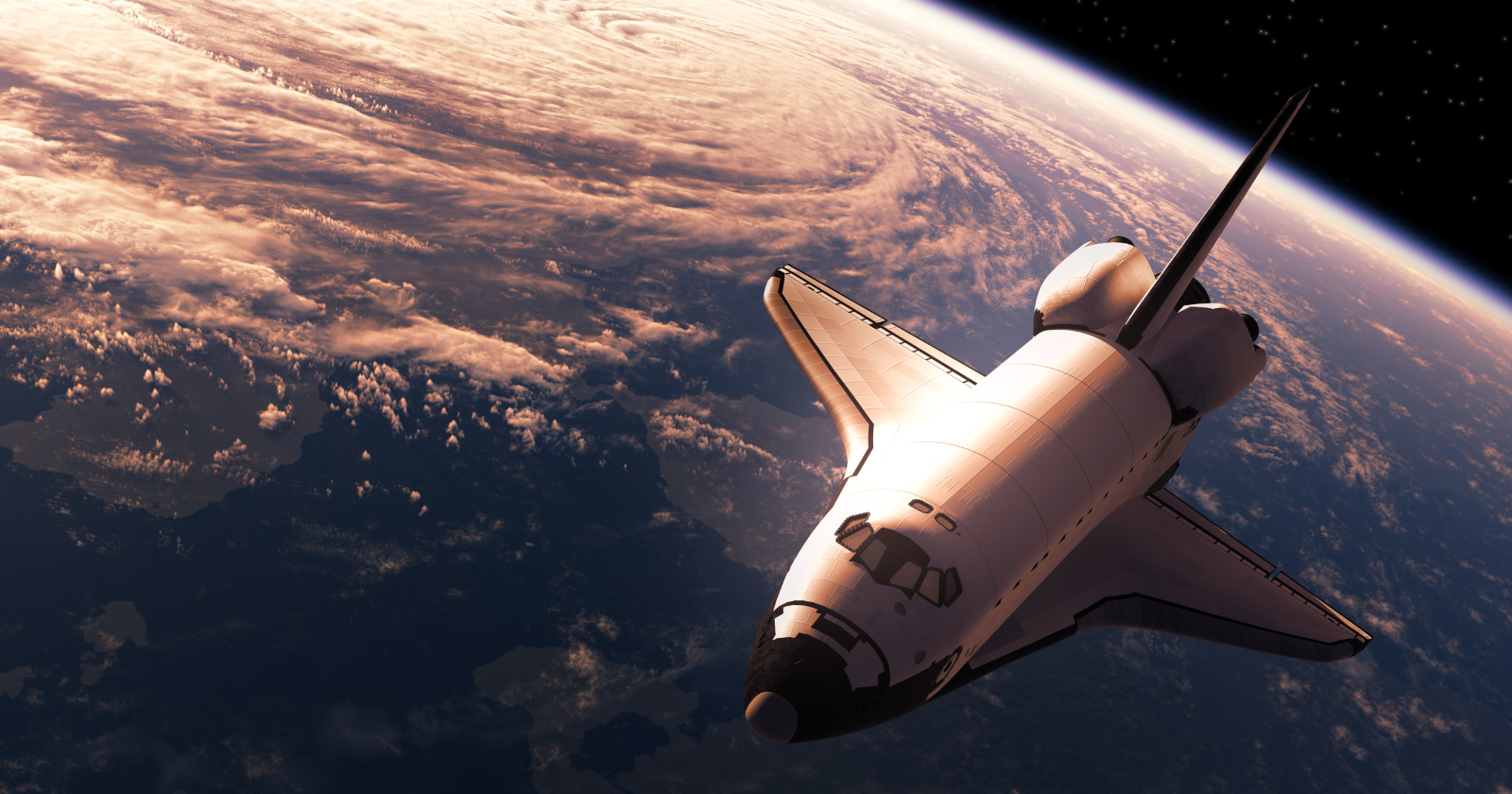
The Buran orbiter, viewed in profile, looked almost identical to NASA’s space shuttle. White tiles, delta wings, twin tail. Soviet engineers had pored over openly published American shuttle documentation, and the aerodynamics of a hypersonic glider returning from orbit do not leave much room for stylistic flourish.
But under the skin, Buran was a different machine. NASA’s shuttle stack used three reusable RS-25 engines bolted into the orbiter itself, fed by the giant orange external tank. Those engines, built by Rocketdyne (now part of L3Harris), became some of the most flown rocket engines in history — one of them, engine E2047, flew on 15 shuttle missions and is now part of the Artemis II core stage.
Buran carried no main engines at all. Lift came entirely from the Energia super-heavy rocket strapped beside it. The orbiter was, in effect, a payload — a glider with a design mass around 105 tonnes, thrusters, and a heat shield, built to ride a separate rocket and come home on its own.
The flight that no one was on
The 15 November 1988 launch happened in weather that would have grounded most aircraft. Snow blew sideways across Baikonur, and according to Mark Wade’s Encyclopedia Astronautica account of the flight, winds reached 20 metres per second against launch-abort criteria of 15. The launch director pressed ahead anyway.
Energia lit, climbed, and threw Buran into an orbit roughly 250 kilometres up. The orbiter circled the planet twice over roughly 206 minutes, then fired its braking engines and began the descent.
No one was inside. The cockpit had seats, displays, a control stick. All of it was empty.
The autopilot flew the entire re-entry. Partway down, sensing the wind, it did something that startled the ground team: instead of flying the planned left-hand approach loop, the orbiter cut almost perpendicular to the runway axis and came around in a wide arc from the opposite side. Controllers briefly feared a malfunction. According to the flight reconstruction preserved at Buran-Energia.com, the verdict from the control room was that the system had not made a mistake. It had recalculated.
Buran touched down at 09:24 Moscow time at about 260 km/h, in a 17-metre-per-second crosswind, on tarmac dusted with snow. The numbers from the post-flight analysis, as recounted in a detailed Russian aerospace history of the programme, were striking: the orbiter met the runway 9.4 metres right of the centreline with a vertical speed of just 0.3 metres per second — a touchdown so soft that the brake parachutes, triggered by compression of the landing-gear struts, deployed about nine seconds late. After a 1,620-metre rollout, the wheels stopped 5.8 metres left of the runway axis.
What the autonomous landing actually proved
The American shuttle, by contrast, was always flown by people on final approach. The commander took manual control during re-entry and steered the orbiter onto the runway by hand. NASA built much of an automated landing capability but never used it through touchdown on a real flight. The cultural and political pressure to keep astronauts in command was too strong.
The Soviet team faced the same pressure from the opposite direction. Before the flight, project workers — including cosmonauts Igor Volk and Alexei Leonov — sent a collective letter to the government arguing that the first flight should be piloted, the way the American shuttle’s had been. A special state commission studied the alternatives and ruled in favour of the two-orbit automated flight: prove the machine could do the job before risking lives.
The autopilot was not a leap of faith. Tu-154 flying laboratories rigged with Buran’s control logic had made more than 200 automatic landings, 70 of them at Baikonur, and the jet-engined OK-GLI atmospheric test vehicle had flown a long series of approaches in which, according to programme test documentation, touchdown deviations came in well inside the specification limits, with rollouts tracking practically along the runway axis.
The 1988 landing did not end the argument over whether humans belonged in the loop — every planned future Buran kept its cockpit, and crewed missions remained on the books. What it settled was the narrower, harder question: whether a computer could bring an 80-tonne unpowered glider down from orbit, through a snowstorm, onto a strip of concrete, alone. It could.
For perspective on what was at stake in that question, look at what had happened on the American side less than three years earlier. On 28 January 1986, the Challenger space shuttle disintegrated 73 seconds after liftoff, killing all seven aboard, including teacher Christa McAuliffe. The Rogers Commission traced the cause to O-ring seals on the right solid rocket booster that failed in unusually cold weather.
What made the loss especially bitter was that engineers at contractor Morton Thiokol had tried to stop the launch the night before. According to ABC reporting on the disaster’s 40th anniversary, engineer Brian Russell and four colleagues — Bob Ebeling, Roger Boisjoly, Al McDonald, and Arnie Thompson — argued through the evening of 27 January that the O-rings would not seal in the forecast cold. Their own management, under NASA pressure, overruled them. “They’re gonna die!” Ebeling told his daughter Leslie in the car the next morning, by her account. Seventy-three seconds after liftoff, they did. Ebeling carried the guilt for thirty years.
NASA redesigned the boosters, kept pilots in command, and flew the shuttle until 2011. The Soviet programme answered the same question by removing the human entirely from the first flight and proving the machine could land alone. Neither approach saved its programme. Buran flew once.
Why a second flight never happened
Buran was supposed to fly again in 1993 — another uncrewed flight, this time projected to last weeks rather than hours. Its sister ship, the nearly complete orbiter 1.02 known as Ptichka, was slated for an automated mission to dock with the Mir space station. A third airframe, orbiter 2.01, was under construction near Moscow, with two more barely begun behind it.
Then the Soviet Union collapsed.
The Buran programme had cost an estimated 16.4 billion roubles across more than a decade, drawing from a defence budget that no longer existed. Russia inherited the hardware, the hangars at Baikonur, and the bill. In 1993, with the new federation in economic freefall, the programme was officially cancelled.
The orbiter that had flown — the 1.01 vehicle called Buran — sat in a hangar at Baikonur for years afterward. On 12 May 2002, the hangar roof collapsed during repair work. Eight workers were killed. Buran, the only orbiter that had ever reached space, was crushed beneath the debris.
The aircraft that carried it, and what happened to that too
Buran needed a ride. Orbiters had to move between the construction plant near Moscow, the test airfield at Zhukovsky, and Baikonur in Kazakhstan, and the only practical way was air transport.
The Soviets built the Antonov An-225 Mriya specifically for the job. It remains the largest aeroplane ever built by maximum takeoff weight: 640 tonnes, six engines, a wingspan of 88.4 metres. It carried Buran on its back, fixed to a dorsal mount above the fuselage, in a configuration almost identical to NASA’s Shuttle Carrier Aircraft but on a much larger scale.
Only one An-225 was ever finished. After the Buran programme ended, the aircraft was repurposed as an outsize commercial freighter, hauling generators, locomotive parts, and military hardware for paying customers around the world.
It was destroyed on 27 February 2022 during fighting at Hostomel airport outside Kyiv in the opening days of the Russia-Ukraine war. The hangar took direct fire. The aircraft burned. Only the tail section and outer wings remained. The machine built to carry the Soviet shuttle outlived the orbiter it carried by twenty years, and was killed by a war that began nearly three decades after the programme that created it had collapsed.
What survived, and what is being rebuilt
Other airframes scattered. The OK-GLI atmospheric test vehicle, the one with jet engines bolted on for runway trials, ended up at the Technik Museum Speyer in Germany. Ptichka still sits at Baikonur, partially complete, its ownership disputed.
The third airframe, orbiter 2.01 — colloquially known as Baikal — had a stranger fate. After cancellation it stayed in the workshops of the Tushino Machine Building Plant near Moscow until 2004, then spent years parked at a dockside on a reservoir of the Moscow Canal, visible from the water, slowly weathering, before being barged from site to site. In August 2024 it arrived at the museum complex in Verkhnyaya Pyshma, just north of Ekaterinburg.
According to FlightGlobal’s reporting on the museum project, the institution describes Baikal as the only flight model preserved in Russia and has begun what it calls a “large-scale, multi-stage restoration project.” Museum complex director Nikolai Rezinskikh told reporters the work starts from an awkward position. “As far as I know there are no specialists in the restoration of space technology,” he said. “No-one has done this kind of work before us.”
The first stage involves scanning the fuselage to identify missing components — heat-shield panels gone from the wings, the undercarriage absent, the nose cone and engine fairings to be remade — and fabricating replacements. Many of the original drawings have been lost or remain unavailable, and the materials are no longer manufactured. The original engineers are mostly retired or dead. Rezinskikh has said the goal is a “finished external appearance” rather than a flight-capable rebuild. The orbiter will look like itself again, even if nothing inside it works.
On 15 November 2025, the only flight of Buran turned 37 years old. The autopilot that landed it in a snowstorm has not been switched on since 1988. The airframe that carried out that flight is gone. The aircraft that ferried it is gone. The country that built it is gone. The hangar where it slept is gone. What remains is a partially complete sister ship in a museum north of Ekaterinburg, being scanned section by section so that the missing pieces can be remade by people who have never built a spacecraft before.