
Resource Hubs: For sales and recruiting teams researching newly-funded startups, Growth List publishes weekly lists of funded companies sourced from Crunchbase, with verified decision-maker contacts.
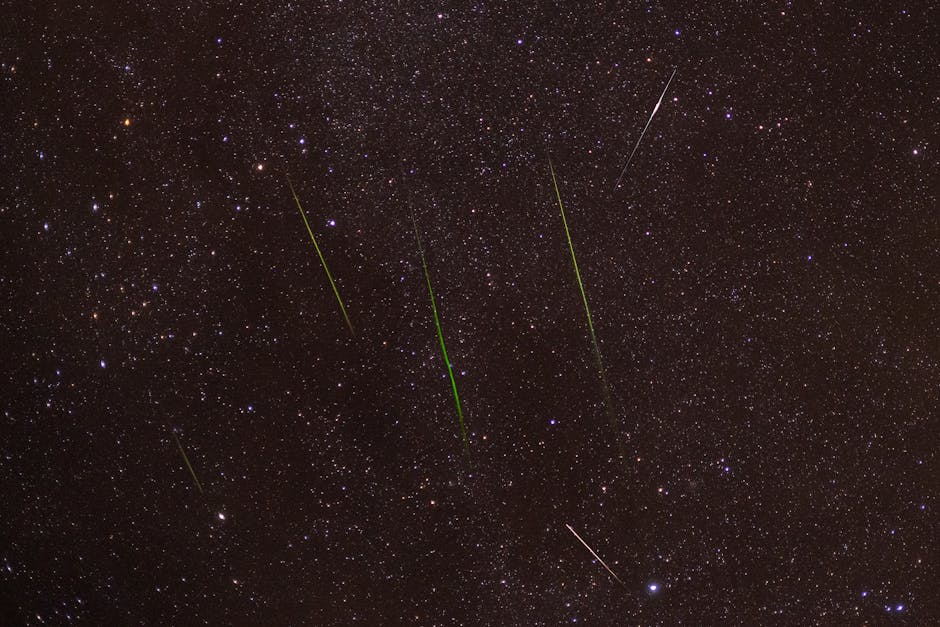
On 28 September 1969, a fireball broke apart above the dairy town of Murchison, Victoria, scattering fragments across the area. A local farmer carried pieces to the offices of the local newspaper the next day, which rang the University of Melbourne, which is why the samples reached scientists before the rain did. Fifty years later, a team led by Philipp Heck at the Field Museum in Chicago dated silicon carbide grains from that same rock — grains that had been isolated from it decades earlier at the University of Chicago — and found they formed between five and seven billion years ago — older than the Sun, older than the Earth, older than anything else ever held in human hands.
The Sun is 4.6 billion years old. Some of the grains in Murchison predate it by more than two billion years.
The morning the sky cracked open
Murchison is a small place. The booms were heard for miles. People smelled something acrid, like methylated spirits. A column of smoke hung where the trail had ended. Within hours, fragments were being picked up off corrugated-iron roofs and out of soft paddock soil.
The piece that crashed through the roof of a hayshed at a local farm became one of the most-studied rocks on Earth. A substantial mass was recovered, which is unusually generous as meteorites go. Most arrive as gravel. Murchison arrived as a delivery.
The classification mattered. Murchison is a carbonaceous chondrite, a type of stony meteorite rich in carbon and organic compounds, largely unaltered since the formation of the solar system. The body it came from never got hot enough to melt and homogenise its contents. That is why grains older than the Sun could survive inside it. They were never cooked away.
What presolar grains actually are
A presolar grain is a microscopic mineral fragment, usually silicon carbide or graphite or silicate, that condensed out of the cooling outflow of a dying star before the Sun existed. It then drifted through interstellar space, got swept into the molecular cloud that collapsed to form the solar nebula, and ended up locked inside a small parent asteroid that eventually broke apart and rained pieces onto a dairy town in Victoria.
The grains are absurdly small. A typical presolar grain is about a micron across — the size of a bacterium — and the unusually large ones Heck’s team dated, up to 30 microns, count as boulders in this field. Murchison is one of the richest known sources.
They are identifiable as presolar because their isotopic ratios — the proportion of, say, carbon-12 to carbon-13, or silicon-28 to silicon-29 — sit so far outside solar system values that they cannot have formed here. They carry the chemical signature of specific stars.
How you date a piece of stardust
Extracting presolar grains from a meteorite is unglamorous chemistry, and for this study it was done about 30 years before the dating, at the University of Chicago. Fragments of the meteorite are crushed into a powder, which turns into a paste so foul that Jennika Greer, a Field Museum graduate student and co-author on the 2020 paper, told the Field Museum it “smells like rotten peanut butter.”
The paste then dissolves in a sequence of acids that destroy the silicate matrix but leave silicon carbide intact. What survives is a residue of grains, most of them around a micron across, each carrying the isotopic memory of a specific dead star.
The dating method is called cosmic-ray exposure dating, and the analogy Heck used in 2020 is the cleanest one in the literature: a bucket left out in a steady rainstorm. The longer a grain is exposed, the more evidence accumulates — and the accumulated total tells you how long the grain sat out in the weather of interstellar space.
The “rain” is galactic cosmic rays — high-energy particles that hammer through the Milky Way at a roughly steady rate. When they hit a silicon carbide grain drifting in interstellar space, they spall new isotopes, including neon-21. Measure the neon-21, back out the exposure time, and you have an interstellar residence interval.
In the Field Museum study, published in the Proceedings of the National Academy of Sciences in January 2020, Heck’s team dated 40 presolar silicon carbide grains from Murchison. Most clustered between 4.6 and 4.9 billion years old. A subset came in older than 5.5 billion years. One grain registered around 7 billion years.
Heck’s group had been working on Murchison grains for a while. A 2009 study in The Astrophysical Journal examined 22 grains and found that 17 of them had spent between three million and 200 million years in interstellar space, far less than the theoretical estimate of around 500 million years that models had predicted.
The 2020 paper extended the dataset and found the older tail — the grains that had been adrift for a billion years or more before the Sun lit up.
Why a baby boom of stars matters here
The clustering of grain ages between 4.6 and 4.9 billion years is the part of the 2020 finding that astronomers argued over hardest. If presolar grain ages were spread evenly across cosmic time, that would support the idea of steady, constant star formation in the Milky Way. They are not spread evenly. They pile up.
The distribution suggests an episode of enhanced star formation. Roughly seven billion years ago, the rate of star birth in the galaxy appears to have spiked. Those stars lived their main-sequence lives, swelled into red giants, and started shedding the dust that became the grains now sitting in a museum drawer in Chicago.
Which stars made them
Most of the silicon carbide grains in Murchison carry the isotopic fingerprint of asymptotic giant branch stars — sun-like stars in late life, puffed up and pulsing, slowly throwing off their outer layers. AGB stars are the principal site of the slow neutron-capture process, the s-process, which builds about half the elements heavier than iron, from strontium up to lead.
Other grains, the rarer ones called Type X, carry signatures of core-collapse supernovae. Some analyses of presolar silicon carbide X grains have found exceptionally high initial 26Al/27Al ratios, sitting at the upper extreme of what was previously reported. Those ratios are difficult to reproduce with classical supernova models. They fit better with models that invoke hydrogen ingestion episodes inside the helium shell of a massive star just before it explodes.
The heaviest elements — gold, platinum, uranium — came from the rapid neutron-capture process, the r-process, which requires neutron fluxes so extreme they only happen in neutron star mergers and certain rare supernovae. Some of the atoms in a wedding ring trace back to a collision of two collapsed stellar cores billions of years ago. A few of them, possibly, are sitting inside Murchison too.
What the grains constrain
Beyond the headline age, presolar grains are now used as instruments. They constrain nucleosynthesis models — which reactions happen at which temperatures in which kinds of stars. They constrain galactic chemical evolution — how the heavy-element content of the Milky Way built up over time. They constrain solar system chronology — how long the parent molecular cloud sat isolated before the Sun ignited.
One recent example: a direct measurement of the bound-state β-decay of fully ionised 205Tl produced a half-life nearly five times longer than prior theoretical estimates, with 10% uncertainty. That measurement feeds into the 205Pb–205Tl chronometer, which uses meteoritic isotope ratios to constrain how long solar material sat in its birth cloud before collapse. Another: a revised neutron-capture cross section for 140Ce, measured at the n_TOF facility, came in up to 40% higher than earlier estimates and reduced predicted s-process contributions to galactic cerium by about 20%.
None of that math works without grains to ground-truth it. Murchison is the ground truth.
The 2020 paper also reported something nobody had expected. The presolar grains came out of the acid residue stuck together, in what Heck described as granola-like clusters. Models of the interstellar medium had not predicted that the grains would survive in clumps. They did.
That detail, small as it sounds, changes how dust gets transported through molecular clouds and how it gets incorporated into forming planetary systems. Clumped dust settles differently. It heats differently. It seeds differently.
More than half a century after the fireball, Murchison is still producing first-of-their-kind results. The original 1969 sample, kept fresh because it was collected quickly, has given researchers amino acids, nucleobases, sugars, the building blocks of biology, and now the oldest dated solid material on Earth.
A fragment of Murchison still sits in a sealed vial at the Field Museum, a few milligrams of black grit older than the solar system. The dot on this page would cover a hundred of the grains inside it. Each one spent millions to billions of years drifting between stars, fell into a paddock in Victoria on a Sunday morning in 1969, and waited there in the grass until someone bent down to pick it up.