
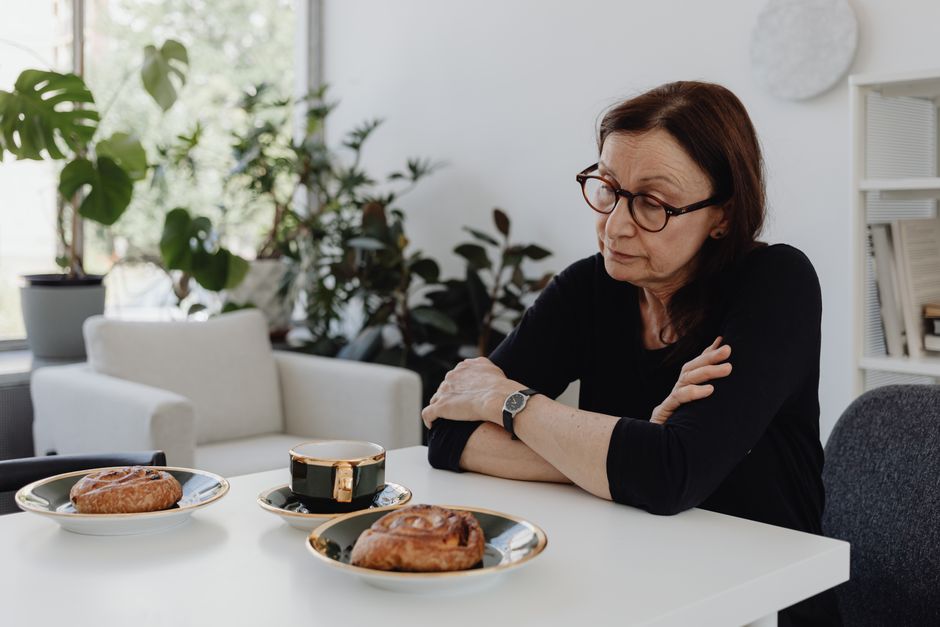
The cultural script says the lonely years come at the edges of adult life — the empty house after the kids leave, the empty chair after a spouse dies. The data says something else. The loneliest stretch for a lot of people now sits squarely in the middle, in the decade when the calendar is fullest and the phone never stops buzzing. Fifties, not seventies. Surrounded, not alone.
The people in this stretch are rarely described as lonely. They are described as busy. Capable. The ones who handle things.
That is part of the problem.
The middle is where the weight lands
A 2026 analysis led by psychologist Frank J. Infurna at Arizona State University, published in Current Directions in Psychological Science, found that Americans born in the 1960s and early 1970s report higher loneliness and depression than earlier generations did at the same age, alongside declines in memory and physical strength. The pattern does not show up the same way in most peer countries. Something specific is happening to midlife in the United States.
According to research on midlife stress in America, the challenges facing people in their fifties are increasingly about managing multiple caregiving roles and financial pressures rather than the stereotypical lifestyle concerns. Researchers note that midlife adults are struggling to balance employment, financial obligations, family caregiving duties, and their own health needs, often with diminishing community and institutional support.
The fifties used to be framed as a coasting decade. A plateau before retirement. For a large share of adults now, it is the opposite — a pinch point where two generations lean on one person who is also still working full time.
What the sandwich actually looks like from inside
The lived version of the “sandwich generation” is not cute. It is a person in their fifties who leaves work early to take a parent to a cardiology appointment, picks up a teenager from practice, answers a Slack message in the pharmacy parking lot, and then sits in the car for a minute before going inside because the car is the only place nobody is asking for anything.
More than 44 million Americans provide unpaid care to an adult relative in any given year, according to figures compiled by the U.S. Department of Health and Human Services’ Office on Women’s Health and summarized by Psychology Today. Sixty-one percent are women. Most are middle-aged. Nearly six in ten are also holding down a paid job.
The same data show that about 75 percent of caregivers who report feeling severely strained — emotionally, physically, or financially — are women. One study cited in that overview found that elderly people who felt stressed while caring for a disabled spouse were 63 percent more likely to die within four years than caregivers who were not feeling stressed. Caregiving, when it has no relief valve, is not a neutral activity. It shortens lives.
Why this loneliness is invisible
Loneliness in older adults gets talked about because it looks like loneliness. A quiet apartment. Fewer visitors. A widow eating dinner alone.
Midlife caregiver loneliness looks like the opposite. It looks like a packed calendar. It looks like a group text that pings all day. It looks like being needed by everyone.
The National Academies of Sciences, Engineering, and Medicine, in its 2020 consensus report on social isolation, made a point that often gets buried: loneliness is the subjective feeling of being isolated, and social isolation is the objective lack of contact. The two do not have to travel together. A person can be in constant contact with other humans and still feel profoundly unseen, because every interaction is transactional. Someone needs a ride. Someone needs a form signed. Someone needs the insurance company called again.
What goes missing is the kind of contact where nobody wants anything.
The friends quietly disappear
One of the under-discussed costs of the caregiving decade is what it does to friendship. Friendships in adulthood survive on small, frequent, low-stakes contact — a walk, a coffee, a phone call returned within the week. Caregivers run out of the surplus time those rituals require. They cancel. They cancel again. Eventually people stop asking.
The Office on Women’s Health notes that caregivers are less likely than non-caregivers to get enough sleep, cook healthy meals, get physical activity, or even fill a prescription because of the cost. Friendship is on the same list of things that get triaged off the calendar. It just does not show up in the medical literature as a symptom.
By the time the caregiving years end — and they do end, usually through a parent’s death — the social infrastructure that used to be there has quietly eroded. The person looks around and notices, often for the first time, who is still close.
Why this generation, why now
Some of this is structural and recent. Infurna’s team identified several factors that distinguish the United States from peer countries where midlife well-being has actually improved. Family policy is one. Since the early 2000s, European countries have steadily increased spending on family benefits — paid leave, subsidized childcare, cash transfers. U.S. spending has been mostly flat. There is no national paid family leave for caring for an aging parent.
Health care affordability is another. Americans pay more out of pocket than people in comparable countries, which means a parent’s illness lands not just as an emotional event but as a household budget event. Income inequality has widened in the U.S. while stabilizing or narrowing elsewhere. Wealth-building has stalled for people born after 1960 compared with the generation before them.
And Americans move. They live farther from their parents and farther from their adult children than people in most peer countries do, which means caregiving often happens via a four-hour drive, an airline ticket, a sibling group chat trying to coordinate across three time zones.
The sandwich is the same shape it has always been. The bread is thinner.
The body keeps a tally
Research compiled in the Psychology Today overview shows that caregivers are more likely to have symptoms of depression and anxiety, more likely to have long-term medical problems like heart disease, cancer, and diabetes, carry higher levels of stress hormones, take longer to heal wounds, and mount a weaker immune response to the flu vaccine. They are at higher risk for problems with memory and attention.
Infurna’s data line up. U.S. middle-aged adults are showing declines in episodic memory that are not appearing in most comparable countries, even as educational attainment has risen. Research suggests that higher education levels may be providing less protection against mental health challenges and cognitive decline in middle age than they did for previous generations. Chronic stress appears to be eating into benefits that a college degree used to reliably confer.
The body of a fifty-three-year-old running a household, a job, and two sets of medical appointments is doing the work of a much older body. It shows up on bloodwork before it shows up on the calendar.
Why nobody asks
There is a quiet social rule that the person holding things together is, by definition, fine. Asking them how they are doing feels almost rude — like questioning the integrity of the structure. If they crack, everyone falls.
So they get asked about their mother. About their father’s last scan. About how the kids are doing in school. Rarely about themselves, and when they are asked, the honest answer feels too long to give in a doorway, so they say they are tired and change the subject.
The National Academies report notes that loneliness in older adults often goes undetected by health care providers because patients do not raise it and clinicians do not screen for it. The same blind spot operates in midlife, with an extra layer: the midlife caregiver is usually the one bringing someone else to the appointment. They are sitting in the chair against the wall, not the one being examined.
What helps, in the unglamorous sense
Research on caregiver well-being keeps pointing to the same handful of things, and none of them are revelations. Respite care — even a few hours a week where someone else takes over — measurably reduces strain. Support groups specific to the condition being managed (dementia, cancer, stroke) lower the feeling of being the only person on earth dealing with this. Naming the caregiving role to a physician, instead of treating it as a private background fact, opens doors to resources that otherwise stay closed.
Infurna’s research adds another piece: social engagement is protective even in the middle of high stress. Research indicates that maintaining social connections through various channels including professional networks, recreational activities, and support groups for caregivers can help reduce stress and support mental health. Connection does not have to be deep to do work. It has to be regular.
The harder truth running underneath all of this is that individual coping strategies can only do so much against a structural shortfall. The countries where midlife is not breaking people are the ones that decided, as policy, to share the load.
Where the reframe does not apply
Not every fifty-something is in this position. Some have parents who are still healthy and independent. Some have adult children who are fully launched. Some have siblings who genuinely split the work. For these people, the fifties really can be the coasting decade the older script described — a stretch of competence and freedom before the next chapter.
And caregiving itself is not only a burden. About half of caregivers, in the Office on Women’s Health data, say the experience has made them appreciate life more or feel good about themselves. The relationship with the parent being cared for sometimes deepens in ways nothing else in adult life provides. The loneliness described here is not an argument against caregiving. It is an argument for noticing the person doing it.
What to do with this, if it describes you
If the description fits — if the calendar is full and the inside is quiet — the first useful move is to stop treating the feeling as a personal failure of gratitude. The data say this is what this decade does to a lot of people right now, in this country, under these conditions. It is not a character flaw. It is a load.
The second useful move is smaller than it sounds: tell one person the unedited version. Not the parent. Not the child. A friend, a sibling, a therapist, a support group, a doctor. Someone whose job in that conversation is not to be reassured that you are coping.
Loneliness in the middle of a full house is sticky because it hides inside competence. The way out tends to start with one honest sentence said to someone who is not going to ask you for anything back.
Late on a weeknight, after the parent has been settled and the teenager’s light has finally gone off, the caregiver in their fifties often sits up a little longer than they meant to. Not doing anything. Not scrolling, even. Just sitting in the only stretch of the day that belongs to them. That quiet hour is where the decade is felt most clearly, and where, eventually, it begins to be named.