
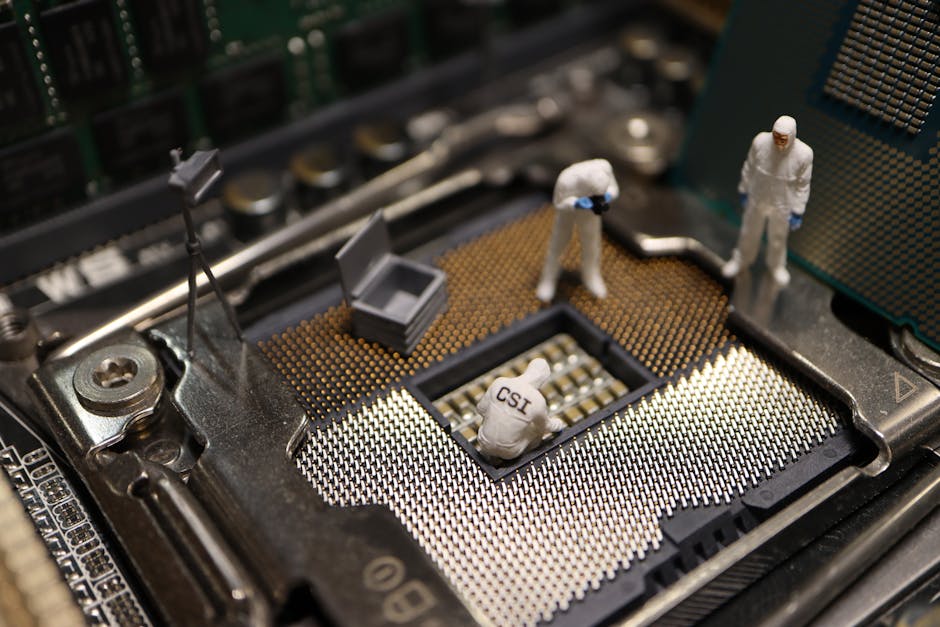
The most durable training tool in American homicide investigation is a set of miniature death scenes built in the 1940s by Frances Glessner Lee, an International Harvester heiress who was denied the college education her brother received.
The rooms are not toys. They are one-inch-to-one-foot crime scenes, dense with bloodstains, tiny newspapers, worn fabric, working locks, hand-rolled cigarettes, and bodies arranged so that investigators have to slow down before they decide what happened.
Eight decades after Lee began making them, the Nutshell Studies of Unexplained Death remain tied to the homicide investigation seminar she founded. The Maryland Office of the Chief Medical Examiner says the Harvard Associates in Police Science seminar was established by Lee in 1945, was first offered at Harvard, later moved to Baltimore, and remains one of the standards for forensic investigation training.
What Lee actually built
The Nutshell Studies are miniature death scenes made at a scale of one inch to one foot. Smithsonian material for the Renwick Gallery exhibition describes them as dollhouse-sized diorama composites of true-crime scenes, created to train homicide investigators to “convict the guilty, clear the innocent, and find the truth in a nutshell.”
The number is slightly complicated. Lee is commonly credited with creating 20 Nutshells, but the Smithsonian American Art Museum says its 2017-2018 Renwick exhibition reunited 18 pieces from Harvard Medical School and the Maryland medical examiner’s office with the so-called “lost nutshell,” for 19 surviving works on view.
The detail work is the part that gets repeated because it is the key to the method. Lee hand-rolled miniature cigarettes. She built doors and windows with locks that worked. She made calendars, letters, canned goods, worn clothing, wallpaper, and curtains at a scale that forced the viewer to move carefully.
The point was not craftsmanship for its own sake. The point was to recreate the pressure of a real death scene, where most details are irrelevant, some are decisive, and the investigator does not know which is which at the start.
Why Harvard let an heiress in
Lee was born in Chicago in 1878 into the family behind International Harvester. Her brother George went to Harvard. She did not. The National Library of Medicine describes her as a New England socialite and heiress who became a major force in forensic medicine after forming a lifelong connection with George Burgess Magrath, her brother’s Harvard classmate.
Magrath went on to teach legal medicine at Harvard and became chief medical examiner of Suffolk County, Massachusetts. According to the National Library of Medicine, Lee helped establish Harvard’s Department of Legal Medicine in 1931, donated the Magrath Library of Legal Medicine in 1934, and endowed the department with $250,000 in 1936.
Harvard’s Countway Library records describe Lee’s donations as supporting the George Burgess Magrath Professorship, the Magrath Library of Legal Medicine, and the department itself. The same records identify the Nutshells as teaching aids, not art objects first.
Harvard Medical School did not admit its first women students until 1945. Lee had already put money, books, models, and institutional pressure inside the school before women were allowed to enter its medical classes.
The pedagogical logic of the Nutshells
Lee’s seminar did not ask investigators to perform a theatrical solution. It asked them to observe. A trainee with a flashlight had to decide whether a death might be homicide, suicide, accident, or natural cause, then explain which physical details supported that judgment.
The Countway Library’s overview describes the Nutshells as models of fictitious crime scenes informed by real cases, each accompanied by background information and clues for investigation. That distinction matters because the models were not simple replicas of single case files. They were compressed teaching instruments.
Lee chose scenes that often centered people whom earlier death-investigation systems could overlook: poor tenants, isolated women, alcoholics, sex workers, and people found dead in domestic rooms. The message was structural but concrete. A body in a shabby room deserved the same careful attention as a body in a wealthy one.
The Nutshells endured because Lee understood the actual skill she was training. A summary cannot teach a detective how to stand in a room and keep looking after the first explanation feels plausible. A miniature room can.
The 1940 case that sharpened the mission
On July 31, 1940, a teletype reached Harvard’s new Department of Legal Medicine from Dartmouth, Massachusetts. The body of Irene Perry, a 22-year-old woman from New Bedford, had been found in the woods. The Boston Globe’s reconstruction of the case says Dr. Alan Moritz and colleagues drove from Boston after the message arrived at 2:30 that afternoon.
The Globe account, republished in PDF by Glessner House, describes a body found about 12 feet off a trail, near a secluded road known locally as Lovers’ Lane. A rope encircled Perry’s neck and was tied to her wrists. One of her stockings bound her ankles.
The case mattered to Lee because it showed what her money had actually bought. Not merely prestige. Not merely a Harvard department. It bought trained people, autopsy discipline, evidence handling, and a standing forensic capacity that could be called into a local murder investigation before the scene was ruined.
The Perry investigation did not become famous because it was neatly solved. It became important to Lee because it exposed the difference between a death that is processed and a death that is investigated.
What the field looks like today
Forensic pathology in the United States still sits inside a patchwork system. In some jurisdictions, death investigations are handled by medical examiners. In others, they are handled by coroners, a role that may be elected and may not require medical training.
Dr. Susan Ely, who joined Yale School of Medicine as director of autopsy service in 2025 after 26 years with New York City’s Office of Chief Medical Examiner, explained the distinction in a Yale News interview. A forensic pathologist is a specialized physician trained to investigate unexpected, unnatural, suspicious, or violent deaths. A medical examiner is a public official, typically a forensic pathologist, with jurisdiction over certain death investigations.
Ely’s career also shows why Lee’s training method still feels current. Yale describes her work across autopsies, court testimony, public-health data, mass fatality events, COVID-19 mortality, and the September 11 attacks. The job is not a single dramatic revelation in a lab. It is accumulated attention under pressure.
On the “CSI effect,” Ely was blunt: “The role of any forensic pathologist is to be a neutral arbiter of the facts, to not have a dog in the fight.” She also noted that, absent a witness, medical science cannot fix time of death to the minute.
Why nothing has replaced the Nutshells
The Lee story is often told as biography: denied education, inherited wealth, late-life reinvention, miniature rooms, forensic reform. But the stranger fact is that the training object outlived the institution that first housed it.
Harvard’s Department of Legal Medicine eventually dissolved. The Nutshells went to Maryland. The seminar continued. The rooms stayed small, silent, and difficult.
That durability is not nostalgia. The Nutshells survived because they force the discipline Lee wanted: impartial attention before interpretation. A trainee has to bend down, peer through a window, notice a stain, ignore a tempting red herring, and sit with uncertainty longer than instinct wants to allow.
In Baltimore, the tiny rooms still hold their dead. A cigarette remains in an ashtray. A calendar stays on a wall. A body lies where Lee placed it, waiting for the next investigator to decide whether they are really seeing what is in front of them.