Coca-Cola’s formula could leak tomorrow and the company would lose almost nothing in enterprise value, because the 1885 trademark precedent set in an Atlanta courtroom is what every cent of the brand’s 90-billion-dollar valuation actually rests on

Close-up of 'Startup' written on a glass panel in an office setting.

Asa Candler walked into a Fulton County, Georgia courthouse in 1888 and within five years he had spent roughly $2,300 buying out every remaining claim to the formula a morphine-addicted pharmacist named John Pemberton had cooked up in a brass kettle in his Atlanta backyard. Candler didn’t care much about the syrup. He cared about … Read more

Clair Cameron Patterson spent the early 1950s purifying lead in an ultraclean Caltech lab he had to build himself to date the Earth at 4.55 billion years, and the contamination he kept finding in his own equipment is what later forced him to spend the rest of his career campaigning to remove lead from gasoline.

Scientist's hand handling test tubes in a laboratory experiment.

Clair Cameron Patterson set out to measure the age of the Earth and ended up spending the rest of his life fighting the lead industry. The answer he arrived at, 4.55 billion years, has held since 1956. The problem he stumbled into along the way almost cost him the project, and then it took over … Read more

Cornelius Vanderbilt died in 1877 holding 105 million dollars, more than the US Treasury, and by the time 120 of his descendants gathered for a 1973 family reunion, they were told that not one Vanderbilt at the table was a millionaire

Explore the haunting beauty of an abandoned mansion interior with decaying walls and vintage charm.

Resource Hubs: For more on founder origin stories and the mechanics of how fortunes are built (and unbuilt), see Growth List’s running coverage of capitalism’s strangest case studies. Most people assume the Vanderbilt family lost its fortune in some single catastrophic event — a market crash, a fraud, a famous heir who gambled it away … Read more

By 1889, German life expectancy at birth hovered around 40 years, so when Bismarck set the pension threshold at 70 he was effectively promising a benefit that the actuarial tables said almost no contributor would ever touch, a design feature later policymakers either forgot or chose to ignore.

Elderly man wearing a cap counts money while holding a wallet on a city street.

Resource Hubs: For more on funded company intelligence and decision-maker data, browse the Growth List weekly and monthly lists of recently funded startups, sourced from Crunchbase and verified by the editorial team. The architect of modern retirement was a 74-year-old chancellor who personally disliked the idea of paying anyone to stop working. Otto von Bismarck … Read more

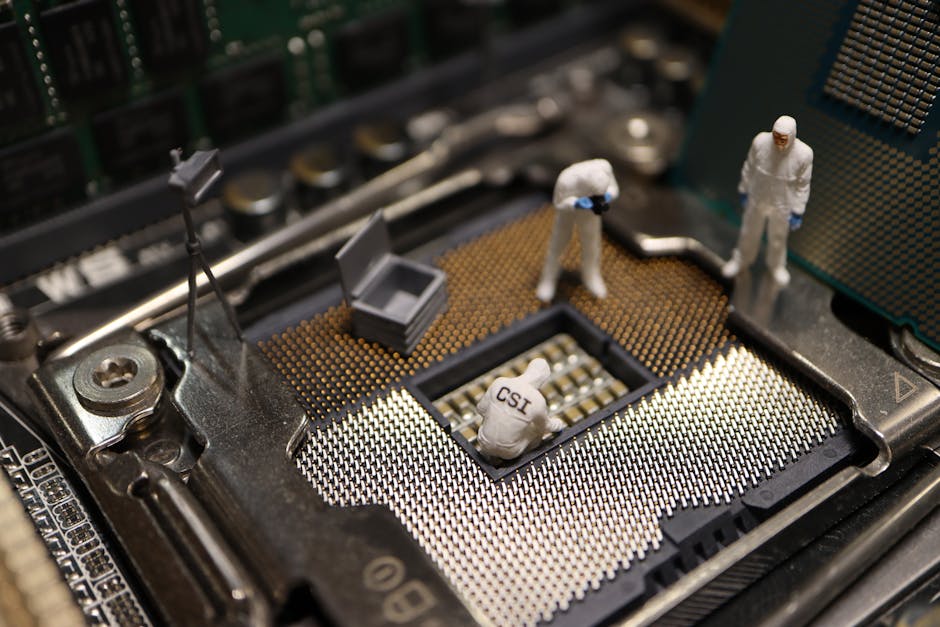
Frances Glessner Lee built 20 dollhouse-sized crime scenes in the 1940s at a scale of one inch to one foot, with working locks and hand-rolled cigarettes, and Harvard Associates in Police Science trainees still study the Nutshells in Baltimore under rules that keep most solutions out of public view

Tiny CSI figures conduct an investigation on a CPU, blending technology with creativity.

The most durable training tool in American homicide investigation is a set of miniature death scenes built in the 1940s by Frances Glessner Lee, an International Harvester heiress who was denied the college education her brother received. The rooms are not toys. They are one-inch-to-one-foot crime scenes, dense with bloodstains, tiny newspapers, worn fabric, working … Read more

Bell Labs in Murray Hill ran on a rule Mervin Kelly built into the architecture — every researcher had to keep their office door open, and the hallway became the company’s real innovation engine

Close-up of 'Startup' written on a glass panel in an office setting.

Mervin Kelly, an executive who ran Bell Labs during the post-war era, made researchers walk to lunch. The dining room sat at the far end of a long corridor in Murray Hill, New Jersey, and the route was deliberate. A solid-state physicist heading for coffee would pass a metallurgist, a vacuum-tube engineer, a topologist working … Read more

When Allied bombers struck Konrad Zuse’s Berlin workshop in 1943 and again in 1944, they incinerated the Z1, the Z2, and the original Z3 along with the blueprints, leaving the inventor of the programmable computer with nothing to prove he had ever built one.

Close-up of 'Startup' written on a glass panel in an office setting.

Explore more from the Growth List archives: long-form features on the people, machines, and moments that quietly shaped how the modern world works. Konrad Zuse finished the world’s first programmable computer on the floor of his parents’ living room in Berlin in 1938, called it the Z1, and watched it jam every few minutes because … Read more

Hedy Lamarr, between film shoots in 1941, sketched out a frequency-hopping signal system on the back of sheet music with composer George Antheil to help Allied torpedoes evade jamming, and that same patent now underpins the Bluetooth handshake in every pair of wireless earbuds.

Close-up of 'Startup' written on a glass panel in an office setting.

🗺 Part of the Growth List Startup Lists Collection All Startup Lists | By Funding Stage | Sales Outreach | Startup Intelligence Walk into any coffee shop and count the wireless earbuds. Pair a phone to a rental car. Tap a contactless card. Open a laptop and watch it scan for a network. Every one … Read more

The small upward curl on every passenger jet wing traces back to one 1976 NASA paper by Richard Whitcomb, and it can save airlines thousands of dollars per flight in fuel

Close-up of 'Startup' written on a glass panel in an office setting.

🗺 Part of the Growth List Startup Lists Collection All Startup Lists | By Funding Stage | Sales Outreach | Startup Intelligence Richard Whitcomb, a NASA aerodynamicist working at Langley Research Center in Virginia, published a technical note in 1976 with the unglamorous title A design approach and selected wind-tunnel results at high subsonic speeds … Read more

A power glitch during a routine 1968 simulation gave NASA controller John Aaron one obscure piece of knowledge, and a year later it was the only reason Apollo 12 didn’t abort after lightning struck the rocket

Close-up of 'Startup' written on a glass panel in an office setting.

🗺 Part of the Growth List Startup Lists Collection All Startup Lists | By Funding Stage | Sales Outreach | Startup Intelligence On November 14, 1969, 36 seconds after Apollo 12 cleared the pad at Kennedy Space Center, a bolt of lightning travelled down the Saturn V’s exhaust trail and into the launch tower’s grounding … Read more

150+ Funded Fitness Startups 2026 | Latest Data & Contacts

Fitness startups database showing funded companies in connected fitness wearables and digital health with B2B lead data and decision maker contacts

Looking for recently funded fitness startups? This startup database tracks 150+ verified companies across connected fitness, wearables, digital health, and gym tech — complete with decision-maker contacts and funding details updated weekly. The global smart fitness market hit $71.86 billion in 2025 and is on track to reach $186 billion by 2034, making fitness startups … Read more

300+ Funded GovTech Startups 2026 | Data & Contacts

Startup database visualization of funded GovTech startups with B2B lead data for government technology companies across CivicTech defense and public safety sectors

Looking for recently funded GovTech startups? This startup database provides 500+ verified government technology companies with decision-maker contacts and funding details updated weekly. The GovTech sector attracted $1.43 billion in funding in 2025, with U.S. GovTech spending projected to reach $357 billion in 2026 across federal, state, and local governments — making these among the … Read more