
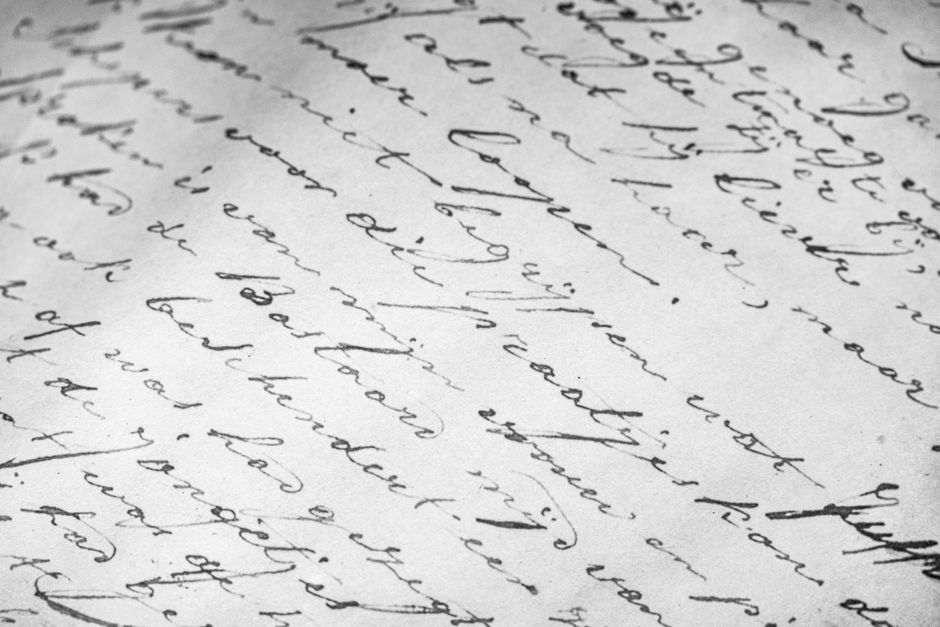
The drawer is almost always the same drawer. Top left of the desk, or the small one in the nightstand, or the shoebox at the back of the closet shelf that has moved through four apartments. Inside: a birthday card from a grandmother who has been dead since 2008, a folded note from a friend who stopped calling around the time of a divorce, a postcard with three sentences on it from someone whose last name is hard to remember. None of it is useful. None of it has been read in years. None of it will be thrown away.
The obvious reading is sentimentality. Maybe a mild case of difficulty discarding, the clinical phrase psychiatry uses for the inability to let things go. And for a small percentage of people, that reading is correct, and the drawer is the visible edge of something that deserves care.
But for most people who keep a drawer like this, something else is going on. The letters are not being saved because they are letters. They are being saved because they are evidence.
What the drawer actually contains
A handwritten letter is one of the only objects a person owns that proves another human being sat down, thought specifically about them for a sustained stretch of time, and produced a physical artifact as a result. Not a like. Not a reply. Not a forwarded meme. A piece of paper that exists because someone decided the recipient was worth twenty minutes of uninterrupted attention.
That is a rare claim to be able to make about oneself. Rarer every year.
The sociologist Erving Goffman, in his influential work on identity and social interaction, argued that selfhood is something performed and sustained through props and settings. Material objects, in this framing, are not decoration around the self but scaffolding for it. They are how a person reminds themselves who they have been, and they are how that self gets carried from one stage of life into the next.
A letter in a drawer is a particularly potent prop, because it does something almost no other object does. It records, in someone else’s handwriting, the version of the recipient that existed in a specific month of a specific year, and what that someone else thought about that version of them.
Memory is unreliable; the drawer is not
The reason this matters has to do with how memory actually works. The self does not store its own history as a continuous film. It stores fragments, and it reconstructs the rest each time the past is summoned, which means the reconstruction shifts every time depending on present mood, present need, present grievance.
The drawer interrupts this. A birthday card from 1997 might contain warm sentiments that feel at odds with how the relationship ended. When marriages fall apart years later, the paper holds that original moment in place.
For people whose adult lives included a significant rupture — a divorce, an estrangement, a grief, a reinvention — this is not nostalgia. It is forensic. It is the only reliable record that a previous self existed and was witnessed.
Identity through objects that hold emotional continuity
Some objects do not function as belongings but as anchors for the self across time. Ticket stubs, dried flowers from a hospital bouquet, the program from a funeral, Post-it notes with brief everyday messages like casual sign-offs become meaningful artifacts. These items have no resale value but confirm that the person remembers correctly.
The drawer, in that sense, is less a collection than a deposition. It says: this happened. This was said. Someone meant it.
Why handwriting specifically
There is something different about handwriting that printed text cannot replicate, and the brain seems to know it. A handwritten letter contains the physical pressure of the writer’s hand, the crossing out and reconsidering, the place where the pen ran low on ink. It is, in a literal sense, a trace of someone’s body in a moment.
Compare this to a text message. The text message says the same words. It does not contain the person. It can be retrieved from a server, screenshotted, forwarded, deleted accidentally, lost when the phone is upgraded. It is information without substance. The handwritten letter is information that has a body.
This is why a card from a grandparent who has died occupies a different category than a saved email from the same person. The card is not a message. It is a piece of the person.
The version of you somebody once thought about carefully
Here is the core of why the drawer stays full.
Most adults pass through long stretches of their lives where nobody is thinking about them carefully. They are being thought about quickly, transactionally, in the gaps between other obligations. A boss replies in three words. A partner sends a thumbs-up. A friend reacts to a story with a heart. The attention is real but thin.
A handwritten letter from twenty years ago is proof that thin attention was not always the standard. Somebody once sat at a kitchen table with a pen and devoted an unhurried hour to the question of what they wanted to say to this specific person. That version of being-attended-to is harder to come by now, and impossible to manufacture retroactively.
The drawer holds that. It is a small archive of a self that was once worth slow attention.
The line where it tips into something else
It would be dishonest to pretend the behavior never crosses into territory that deserves clinical concern. Hoarding disorder is a real condition, with symptoms that typically begin in adolescence or early adulthood and often intensify over time. The defining features are difficulty discarding combined with clutter that prevents rooms from being used for their intended purpose — the kitchen that cannot be cooked in, the bed that cannot be slept on.
A drawer of letters is not that. A drawer of letters is the opposite of that. It is curated, bounded, finite. It fits inside a single container and stays there. The person knows what is in it. The person could, in principle, throw it away tomorrow and choose not to.
The difference between keepsakes and hoarding is not the act of keeping. It is whether the keeping is contained or whether it has begun to colonize the life around it.
What the drawer protects against
People in their fifties and sixties report a particular experience that explains a lot about why these drawers exist. The experience is being misremembered, or being remembered selectively, by the people who were there. A sibling tells the story of a childhood that does not match. An ex-spouse describes a marriage that bears no resemblance to the one that was lived. A grown child has forgotten the years of effort that went into raising them.
In each case, the person feels their own history slipping out of their control, becoming somebody else’s version. The drawer is the rebuttal. A letter from 1986 in which a now-distant sibling expressed deep appreciation is not produced as evidence in any actual argument. It is produced as evidence to oneself, privately, in the kitchen, at the end of a hard day.
The drawer as a future inheritance
There is also a forward-facing dimension that often goes unspoken. People who keep letters are often, at some level, aware that someone will eventually find the drawer. A daughter clearing out a parent’s house. A nephew sorting through a small estate. The letters then become a different kind of object: a way for the dead to be known by the living, in their own handwriting, in their own words, from before they were the version their descendants remember.
The British television series The Repair Shop built an entire format around exactly this dynamic — the way an object passed down across generations carries a kind of presence that survives the person, as Psychology Today’s Thomas Henricks observed when writing about treasured possessions. The drawer is being assembled, in part, for an audience that will exist after the assembler does not.
The quiet reason it stays in the drawer and not on display
One detail worth noticing: the letters almost never come out. They are not framed. They are not scrapbooked. They are not laminated or scanned or organized chronologically. They sit in a drawer, folded the way they were folded when they arrived, and the drawer gets opened maybe twice a year, often by accident.
This matters, because it tells you the function. If the letters were being kept for display, they would be displayed. They are being kept for confirmation. The knowledge that they are in the drawer is doing most of the work. The person does not need to read the letter from their late father. They need to know they could.
The drawer is a kind of insurance policy against forgetting, and against being forgotten, and against being told a version of one’s own life that doesn’t match what actually happened.
What gets thrown away instead
One of the more revealing things about people who keep these drawers is what they do not keep. They are often, in other domains, perfectly capable of ruthless discarding. They throw away receipts, donate clothes seasonally, delete emails in bulk, recycle magazines without reading them. The drawer is not the symptom of an inability to let go. It is a deliberate exception, carved out within an otherwise functional relationship to stuff.
That selectivity is the giveaway. It signals that the keeping is not compulsive but considered. The person has decided, across decades, that these particular objects are exempt from the general rule. The exemption is the whole point.
The drawer in twenty years
Whether anyone in their twenties today will have a drawer like this in fifty years is an open question. The texts will not survive. The DMs will not survive. The thoughtful three-paragraph email from a friend going through a hard time will, in all likelihood, be lost in a platform migration or an account closure or a forgotten password. The generation now coming of age will have to find different objects to anchor their continuity — playlists, perhaps, or screenshots, or the rare handwritten note that arrives as a novelty.
But for the people whose drawers are full now, the artifacts are already in there, already aging, already doing their quiet work. The cards yellow slightly. The ink fades a little. The handwriting of the dead becomes more precious every year for the simple reason that there will never be any more of it.
The drawer stays closed most days. It does not need to be opened. It just needs to be there, in the same place it has been for twenty years, holding the proof.