
Resource Hubs: For more long-form features from the Growth List Team, browse our features archive. Funding data referenced throughout is sourced from Crunchbase and the primary mission archives cited inline.
Most planetary missions end with a controlled burn into empty space or a quiet drift toward the heat death of the solar system. Galileo did not. On September 21, 2003, NASA flight controllers at the Jet Propulsion Laboratory deliberately pushed the spacecraft into Jupiter’s atmosphere at 48.2 kilometres per second, where it was crushed and vaporised within minutes. The common assumption is that the probe was simply out of fuel and disposed of for convenience. The actual reason is stranger: Galileo had found enough evidence of a habitable ocean beneath the ice of Europa that NASA decided the spacecraft itself had become a biological contamination risk, and the only acceptable way to neutralise it was to throw it into Jupiter.
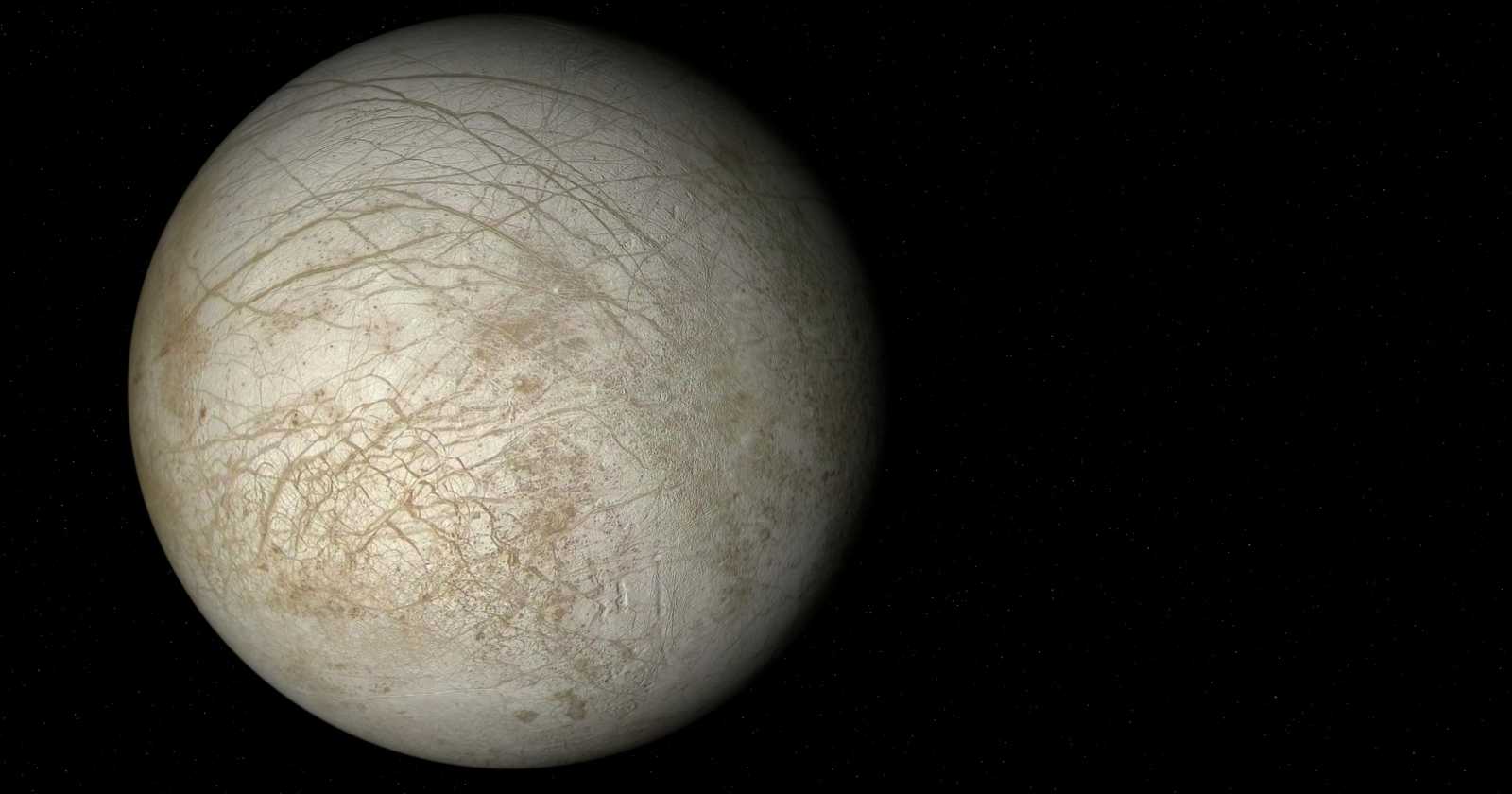
The decision had been forming for years. On 3 January 2000, during a close flyby designated E26, Galileo’s magnetometer detected an induced magnetic field around Europa that flipped its orientation in step with Jupiter’s rotating field — the kind of signal you only get from a global layer of electrically conductive fluid. A team led by Margaret Kivelson at UCLA published the interpretation in Science later that year: a salty ocean was sloshing beneath the ice. That single measurement reshaped the mission’s endgame.
Act one: the discovery
Galileo arrived at Jupiter in December 1995 and spent nearly eight years looping through the Jovian system. It was not designed as an astrobiology mission. It carried eleven scientific instruments, among them a Near-Infrared Mapping Spectrometer (NIMS), a magnetometer, a plasma wave subsystem, and a solid-state imager. None of those instruments were built to look for life. They were built to map a gas giant’s weather and characterise its larger satellites.
The instruments found something else. The January 2000 flyby placed the spacecraft far south of Jupiter’s magnetic equator, in a region where the radial component of Jupiter’s field pointed inward — an orientation that, for the first time, could distinguish between a permanent magnetic dipole on Europa and an induced one. The data fit only the induced case.
The only physical configuration that fit the readings was a global layer of electrically conductive fluid — a salty ocean — sitting beneath an ice shell that contemporary models placed at roughly 15 kilometres thick. NIMS spectra reinforced the picture, showing hydrated salts on the surface consistent with brine that had welled up from below. The imager returned pictures of chaos terrain — blocks of ice that looked like icebergs frozen mid-rotation, as if the shell had broken apart and refrozen. Each line of evidence pointed the same direction, but it was the magnetometer wobble that closed the argument.
Margaret Kivelson’s team at UCLA’s Institute of Geophysics and Planetary Physics had been combing Galileo’s magnetometer returns since the spacecraft arrived in 1995. The 3 January 2000 pass was the geometry they had been waiting for — earlier flybys in 1996 and 1998 had hinted at a conductive layer but could not rule out a permanent magnetic dipole. The southern, inward-pointing pass settled it.
Europa stopped being one moon among many that day. A spacecraft that had been built to study a gas giant had, almost by accident, identified the most accessible habitable environment beyond Earth. And that finding immediately created a problem the mission designers had never planned to solve.
Act two: the dilemma
Galileo had been assembled in clean rooms, but not the kind reserved for landers heading to Mars or Europa. It was a flyby and orbiter, built under the assumption it would never touch the surface of anything biologically interesting. Microbial reduction protocols were minimal. The hardware that left Earth in 1989 carried whatever terrestrial life had survived the assembly process, and some of it had almost certainly survived the trip.
By 2000 and 2001, NASA’s Planetary Protection Office was running the numbers on what would happen if Galileo’s orbit decayed and the spacecraft eventually drifted into Europa. Even a small probability of impact, multiplied by the unknown number of terrestrial microbes that might have survived years of Jovian radiation in dormant pockets on the hardware, was deemed unacceptable. The ocean the magnetometer had revealed was precisely the kind of environment where a stowaway might find purchase.
The Outer Space Treaty of 1967 obligates spacefaring nations to avoid harmful contamination of celestial bodies. For a world that might host its own biology, “harmful” includes seeding it with Earth microbes that could either out-compete native life or, more practically, ruin any future attempt to detect native life by polluting the sample. Leaving the spacecraft in a stable Jovian orbit was rejected because long-term orbital perturbations from the moons could eventually push it onto an impact trajectory. Parking it in a heliocentric orbit was not feasible — Galileo did not have the fuel to escape Jupiter’s gravity well. Every passive option terminated, eventually, in some non-zero chance of hitting Europa.
Act three: the sacrifice
Jupiter itself was the only target that guaranteed destruction. Atmospheric pressure and heat would sterilise the hardware on the way down, and the planet’s gravity well made the trajectory cheap to set up with the fuel Galileo had left. The mission planners chose it.
The atmospheric entry on September 21, 2003 was timed so the Deep Space Network could track the final telemetry. Galileo had been communicating through its low-gain antenna for its entire run after its high-gain dish famously failed to deploy in April 1991, and it kept transmitting until the spacecraft passed behind Jupiter’s limb from Earth’s perspective and the radio path was cut.
The orbiter then disintegrated in Jupiter’s dense atmosphere at 11:57 a.m. Pacific Daylight Time, entering at 48.2 kilometres per second — nearly 108,000 miles per hour. The final telemetry packets, sent just before the occlusion, arrived at the Deep Space Network’s Goldstone complex in California at 12:43:14 p.m. PDT, the roughly 52-minute delay being the one-way light time from Jupiter to Earth that day.
Jupiter does not have a surface in the conventional sense; the probe was crushed by atmospheric pressure long before it would have reached anything resembling solid material, in the layers where hydrogen begins to behave like a metal.
By then, Galileo had completed 34 science orbits of Jupiter and survived a total radiation dose more than four times what its components were rated to handle. It had cost roughly $1.4 billion from the start of planning through end of mission. NASA destroyed it on purpose to protect a moon the spacecraft itself had argued into existence as a place worth protecting.
The cost of a single magnetometer reading
The decision to destroy Galileo was driven, in the end, by a wobble in a magnetic field around a moon the spacecraft was never designed to study in detail. That wobble was enough to flip Europa’s status from being one of many moons of scientific interest to a priority target in the search for life, and the consequences cascaded forward by more than two decades.
Galileo’s death also set a template. Fourteen years later, in September 2017, NASA repeated the maneuver with Cassini at Saturn — another flagship orbiter that had discovered habitable environments (the salt-water plumes of Enceladus) and could not be allowed to drift. Cassini was steered into Saturn’s atmosphere for the same reason and to the same end.
Europa Clipper, which launched in October 2024 and is scheduled to arrive in the Jovian system in April 2030, exists because of the January 2000 reading. The mission will conduct 49 close flybys of Europa, built from the start under a planetary protection regime that explicitly forbids impacting Europa and plans a disposal impact on Ganymede instead, around September 2034.
The European Space Agency’s JUICE mission, launched in April 2023 and arriving in 2031, exists because of it. The planetary protection rules that now govern every outer-planet mission tightened because of it. Every future lander headed for an ocean world will be assembled, sterilised and disposed of according to a framework that traces back to a single afternoon in January 2000.
One instrument reading, on one flyby, of one moon, rewrote the rulebook for how humanity is allowed to explore the solar system. Somewhere beneath the ice on a moon hundreds of millions of kilometres away, the ocean that Galileo argued into existence keeps turning over in the dark — untouched by anything from Earth, because of the spacecraft that found it.