

📅 Last Updated: February 11, 2026
The email startup ecosystem continues to evolve at breakneck speed, with email startups raising record funding in 2025. Following Superhuman’s groundbreaking $33M Series B funding led by Andreessen Horowitz, the race to reinvent email has intensified across Silicon Valley and beyond. With over 4 billion email users worldwide and the B2B SaaS market projected to reach $819 billion by 2028, email startups are attracting unprecedented investor attention.
In 2025 alone, email technology companies raised over $450 million in venture funding, with innovations spanning AI-powered inbox management, end-to-end encryption, team collaboration tools, and developer APIs. This surge reflects a broader shift in how B2B sales teams approach outreach and communication.
Below, we explore Superhuman’s revolutionary approach alongside 6 other email startups transforming how we communicate, collaborate, and conduct business. Whether you’re a sales professional mastering cold email outreach or a founder building the next communication platform, these companies are setting the standard.
Table of Contents
What Makes Superhuman Worth $260 Million?
Superhuman didn’t just raise $33 million—they created a cultural phenomenon. The premium email app, priced at $30 per month, boasts a waiting list exceeding 180,000 people while serving just 15,000 active users. This deliberate scarcity has driven a valuation of $260 million, making it one of the most talked-about SaaS startups in recent memory.
According to founder Rahul Vohra, Superhuman’s appeal lies in its obsessive focus on speed. The platform promises to be “the fastest email experience ever made”—and delivers on that promise through three core innovations:
AI-Powered Email Triage
Unlike traditional spam filters, Superhuman’s AI learns your workflow patterns to surface the most important messages first. During onboarding, users complete a detailed questionnaire about their communication habits, followed by a mandatory video tutorial. This white-glove approach ensures users understand the platform’s capabilities from day one while feeding critical data to the AI engine.
The algorithm analyzes factors like sender importance, message urgency, and historical response patterns to automatically organize your inbox—similar to how email warm-up tools gradually build sender reputation, except for the recipient side.
Browser-Based Architecture for Speed
Most email clients retrieve data from providers like Gmail through their servers, adding latency. Superhuman stores information directly in your browser, dramatically reducing load times. Messages appear instantly, making the experience feel native rather than cloud-based.
Keyboard-First Design Philosophy
Every function in Superhuman has a keyboard shortcut. Scheduling an email? Inserting a template? Checking someone’s LinkedIn? All accessible without touching your mouse. The platform auto-detects dates (pulling up your calendar), names (linking to LinkedIn profiles), and common phrases (suggesting templates).
The Results: Users report spending 4+ hours less per week on email—time that B2B sales teams can redirect toward prospecting and closing deals.
6 Other Email Startups Disrupting Communication
1. Front – Shared Inbox Collaboration
Total Funding: $79.3 million (Series B: $66 million)
Founded: 2013
Headquarters: San Francisco, CA
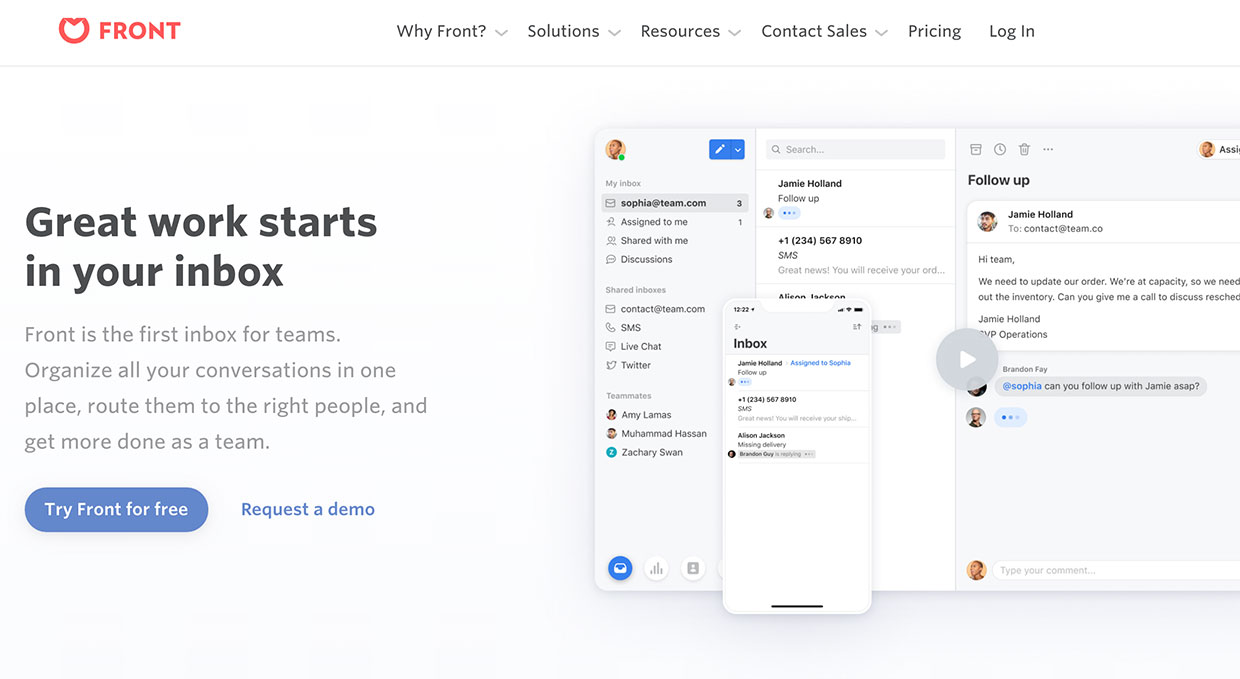
Among email startups focused on collaboration, Front reimagines team email as a collaborative workspace. Rather than individuals managing siloed inboxes, teams share access to email, SMS, Slack messages, and social media channels through a unified interface.
Key Innovation: Front’s collision detection prevents multiple team members from responding to the same inquiry. When someone opens a message, others see real-time notifications—eliminating duplicate responses and improving customer communication workflows.
The platform integrates with over 50 business tools, including Salesforce, HubSpot, and Asana, making it popular among B2B startups managing high-volume support and sales operations.
Notable Investors: Sequoia Capital, Social Capital, DFJ Growth
Target Users: Customer success teams, sales teams, support operations
According to TechCrunch, Front processes over 1 billion messages annually for companies like Shopify, Hootsuite, and MailChimp—demonstrating the platform’s enterprise-grade scalability.
2. ProtonMail – End-to-End Encrypted Email
Total Funding: $4.8 million (Latest: €2 million)
Founded: 2014
Headquarters: Geneva, Switzerland
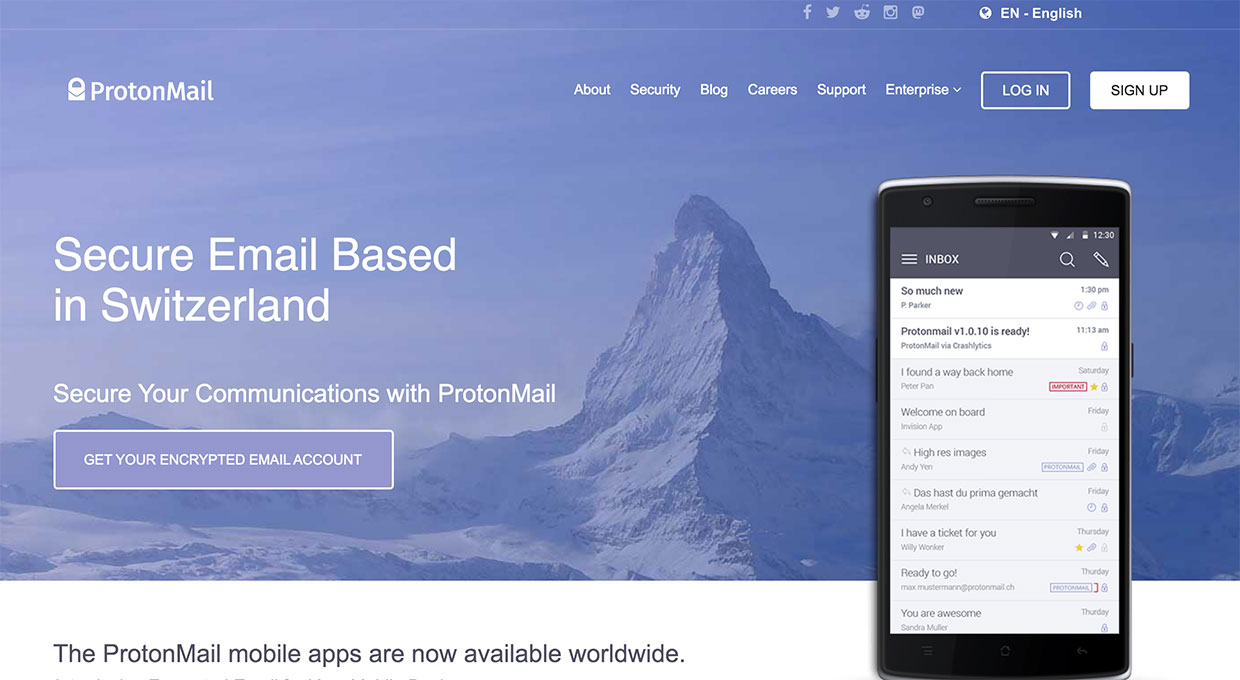
Among privacy-focused email startups, ProtonMail emerged from CERN as a response to growing privacy concerns. The platform offers end-to-end encryption with a zero-access architecture—meaning not even ProtonMail can read your messages.
Key Innovation: Unlike traditional encrypted email requiring both sender and recipient to use the same service, ProtonMail allows encrypted communication with non-ProtonMail users through password-protected messages. The recipient receives a link to securely access the email without creating an account.
Blockchain Integration: Recent job postings suggest ProtonMail is exploring blockchain technology to further decentralize email infrastructure and enhance privacy guarantees.
Notable Investors: Charles River Ventures, FONGIT
Target Users: Privacy-conscious professionals, journalists, legal teams, fintech startups
With over 70 million accounts created and recognition from the European Commission for GDPR compliance, ProtonMail has become the de facto standard for secure business communication—particularly relevant for teams navigating GDPR cold email requirements.
3. Nylas – Email API Infrastructure
Total Funding: $120 million (Series C: $60 million)
Founded: 2013
Headquarters: San Francisco, CA
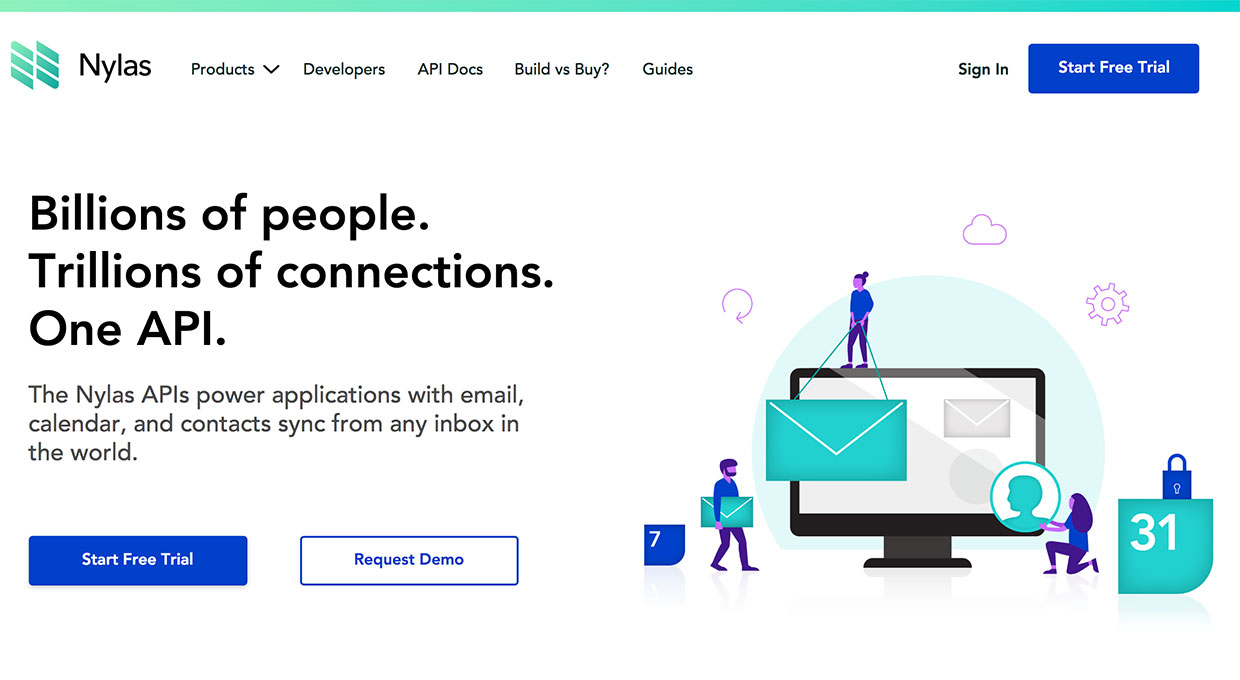
Unlike consumer-facing email startups, Nylas positions itself as the “Stripe of email”—providing developers with APIs to integrate email, calendar, and contact functionality into applications without building infrastructure from scratch.
Key Innovation: A universal API that connects to all major email providers (Gmail, Outlook, Exchange, iCloud) with a single integration. Developers can build email features in hours rather than months, similar to how Stripe simplified payment processing.
Enterprise Clients: Salesforce, Comcast, Ceridian, and over 1,000 other companies use Nylas to power their email features. The API processes billions of emails annually, making it critical infrastructure for B2B SaaS platforms.
Notable Investors: 8VC, Spark Capital, Slack Fund
Target Users: Developers, product teams, CRM platforms, recruiting startups
According to VentureBeat, Nylas reduces email integration development time by 90%, explaining why companies like Upwork and Wix rely on their infrastructure.
4. Polymail – Real-Time Email Collaboration
Total Funding: Undisclosed (Y Combinator-backed)
Founded: 2015
Headquarters: San Francisco, CA
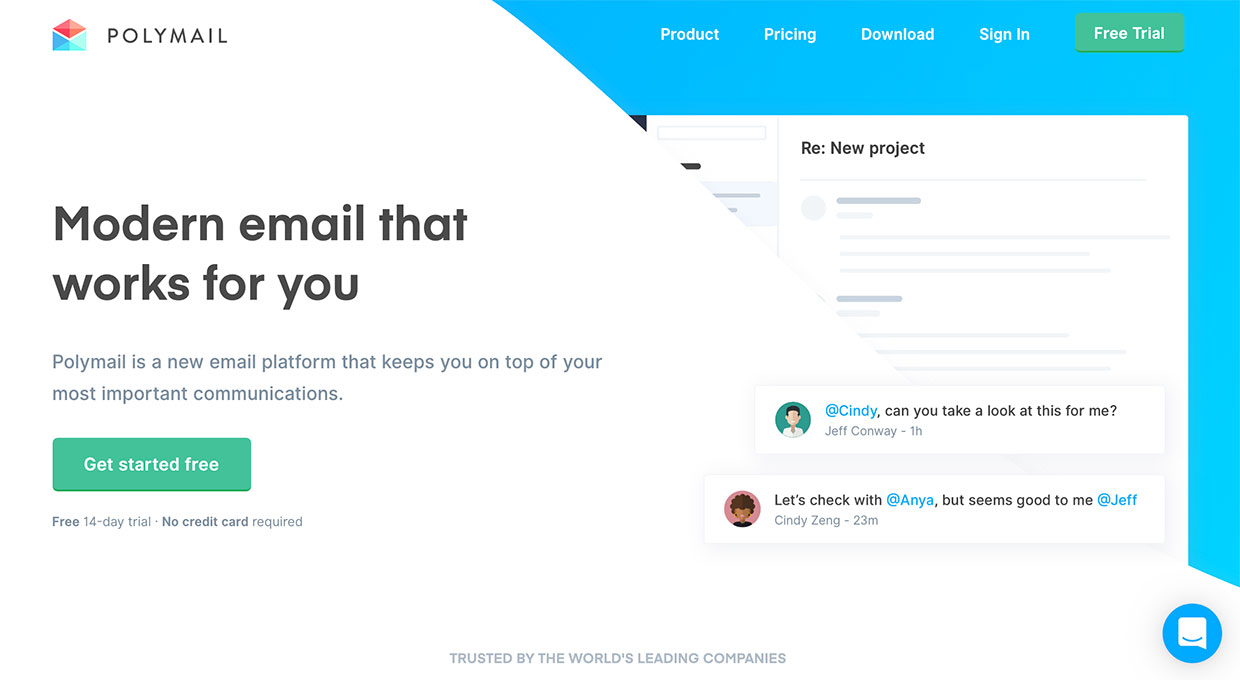
Polymail bridges individual and team email workflows. While maintaining personal inboxes, users can share specific emails with teammates for real-time collaboration—complete with comments, tasks, and @mentions.
Key Innovation: Email activity tracking without third-party tools. Polymail shows when recipients open messages, click links, and download attachments—critical intelligence for cold email follow-ups and sales sequences.
Integration Ecosystem: Connects with Slack, Salesforce, Trello, and over 30 other platforms, creating a unified workspace for sales teams managing complex outreach campaigns.
Notable Investors: Y Combinator, Lowercase Capital
Target Users: Sales professionals, startup teams, remote workers
Polymail serves over 3,000 customers globally, with particularly strong adoption among Series A startups building their first sales operations.
5. Amitree – AI Email Assistant
Total Funding: $22.2 million (Series B: $9.3 million)
Founded: 2012
Headquarters: San Francisco, CA
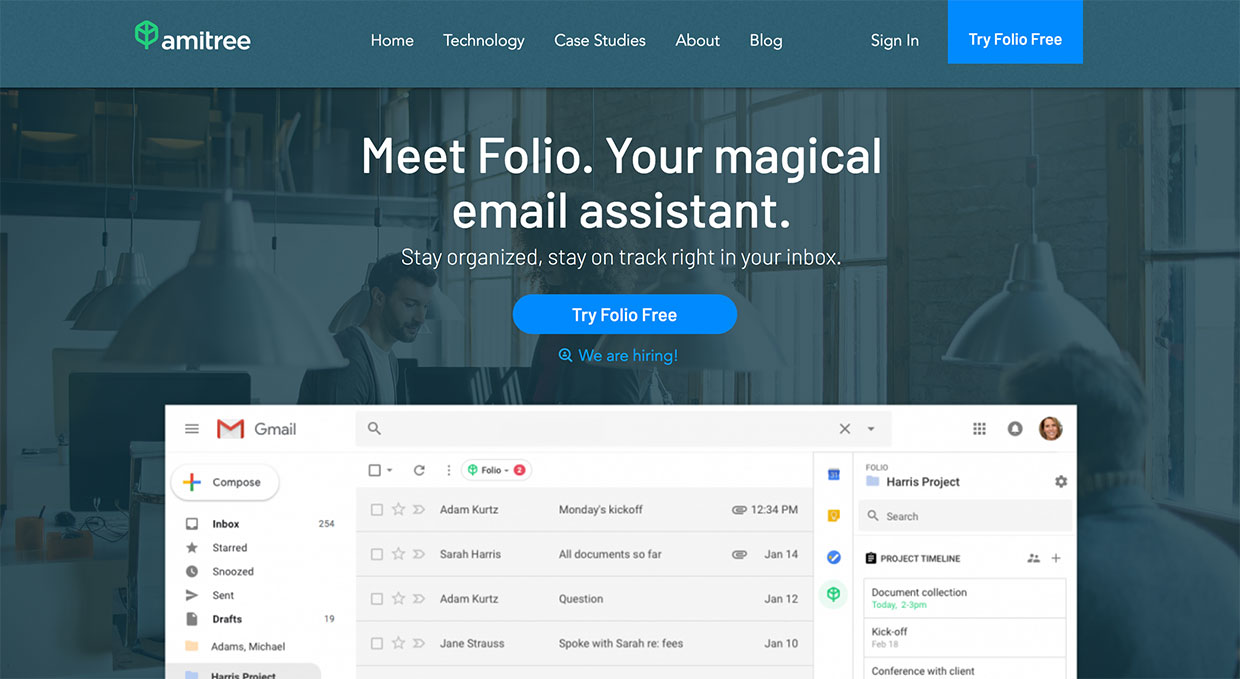
Amitree uses artificial intelligence as a virtual project manager that lives in your inbox. The platform analyzes email conversations to automatically create tasks, set reminders, and organize deals—particularly useful for real estate professionals.
Key Innovation: Amitree doesn’t just filter emails—it understands context. When you discuss a property closing date, it creates calendar events and reminds relevant parties automatically. It tracks document deadlines, follows up on pending responses, and maintains deal momentum without manual intervention.
Market Focus: Originally built for real estate agents, Amitree has expanded to serve sales teams, project managers, and anyone managing complex, multi-party transactions via email.
Notable Investors: NAR Reach, Second Century Ventures, Montage Ventures
Target Users: Real estate agents, mortgage brokers, sales teams, proptech startups
According to Forbes, Amitree users save an average of 6 hours per week on administrative tasks—time they redirect toward client relationships and revenue generation.
6. Valimail – Email Authentication & Security
Total Funding: $84 million (Series C: $45 million)
Founded: 2015
Headquarters: San Francisco, CA
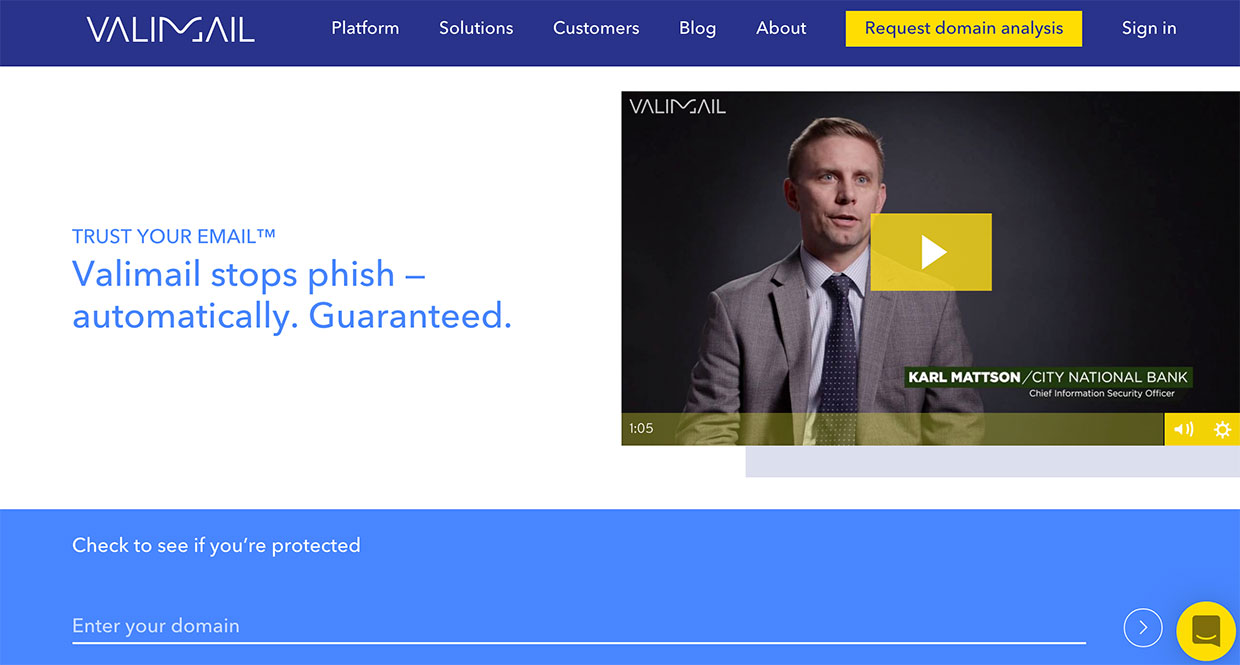
Valimail tackles business email compromise (BEC)—a category of cybercrime that cost companies $43 billion between 2016 and 2021, according to the FBI. The platform automatically implements email authentication protocols (SPF, DKIM, DMARC) to prevent domain spoofing and phishing.
Key Innovation: One-click DMARC enforcement. Most companies struggle to implement email authentication because it requires technical expertise and can break legitimate email flows. Valimail automates the entire process, identifying all legitimate email sources and blocking unauthorized ones—critical for email deliverability.
Enterprise Adoption: Uber, Yelp, WeWork, and over 8,000 other organizations use Valimail to protect their email domains. The platform monitors billions of authentication events daily.
Notable Investors: Insight Partners, Shasta Ventures, Bloomberg Beta
Target Users: Enterprise IT teams, security operations, cybersecurity startups, compliance teams
Understanding email authentication is essential for B2B sales teams—particularly those running high-volume outreach campaigns. For a deeper dive, check out our guide on DMARC, DKIM, and SPF.
The Future of Email Startups
The email startup ecosystem shows no signs of slowing, with email startups attracting over $450 million in 2025 alone. Several emerging trends are driving continued innovation and investment:
AI-Powered Personalization at Scale
Following Superhuman’s success, next-generation email startups are incorporating AI to generate personalized responses, suggest optimal send times, and predict recipient engagement—particularly valuable for cold email campaigns.
Privacy-First Architecture
With data privacy regulations expanding globally, startups like ProtonMail are pioneering approaches that balance functionality with user privacy. Expect more European startups to lead this category.
Developer-First Email Infrastructure
The success of Nylas demonstrates demand for email infrastructure-as-a-service. As more SaaS companies build email functionality into their products, API-first providers will capture significant market share.
Vertical-Specific Solutions
Rather than building general-purpose email clients, newer startups are creating industry-specific solutions—like Amitree for real estate or specialized tools for healthcare startups managing HIPAA-compliant communication.
Want To Contact These Startups?
We send recently funded startups with double-verified email addresses, CEO details, and much more directly to your inbox. Sign up and get 100 leads free.
Key Takeaways for B2B Sales Teams
The rise of well-funded email startups presents opportunities for B2B sales teams. If you’re selling to email startups or using email for outreach, here’s what matters:
For Sales to Email Startups:
- These companies are well-funded and actively building sales/customer success teams
- Decision-makers value efficiency—demonstrate ROI clearly and quickly
- Privacy and security are critical; ensure your outreach respects GDPR compliance
For Email Outreach Practitioners:
- Tools like Superhuman and Polymail are becoming standard among high-performing sales teams
- Understanding email authentication and deliverability best practices is non-negotiable
- AI will increasingly handle routine email tasks—focus on high-value personalization
For Founders & Investors:
- The email startup market is bifurcating: enterprise collaboration tools vs. individual productivity apps
- AI startups applying machine learning to email workflows are attracting significant Series A/B funding
- Developer infrastructure (APIs, authentication, deliverability) represents a multi-billion dollar opportunity
Frequently Asked Questions
What makes email startups attractive to investors?
Email startups attract investors because email remains the backbone of business communication. Despite being decades old, email presents ongoing opportunities for innovation in areas like AI-powered productivity, security, privacy, and developer infrastructure. The total addressable market exceeds $50 billion annually, with strong recurring revenue models and low customer acquisition costs for well-positioned players.
How do email startups monetize their platforms?
Most email startups use subscription-based pricing models. Superhuman charges $30/month per user. Front offers tiered plans from $19-49/user/month. Nylas uses usage-based API pricing. ProtonMail provides freemium options with paid privacy features. Enterprise contracts and developer API fees represent the largest revenue streams for infrastructure-focused companies like Nylas and Valimail.
Which email startup categories are receiving the most funding?
Among email startups receiving funding in 2025, three categories dominate: (1) AI-powered productivity tools like Superhuman, (2) Email API/infrastructure providers like Nylas, and (3) Security/authentication platforms like Valimail. Privacy-focused solutions like ProtonMail are attracting increased European investment following stricter data protection regulations.
How can B2B sales teams leverage email startup innovations?
Modern B2B lead generation requires mastering new email technologies. Sales teams should implement email warm-up protocols, understand email authentication, use tracking tools for follow-up optimization, and adopt AI-powered personalization. For teams selling to funded startups, timing outreach around funding announcements significantly improves response rates.
What’s the difference between email clients and email infrastructure companies?
Email clients (Superhuman, Front, Polymail) are user-facing applications that replace or enhance traditional inboxes. Infrastructure companies (Nylas, Valimail) provide backend services that other applications build upon. Infrastructure plays generate higher valuations due to network effects and stickier enterprise contracts, while clients compete on user experience and pricing.
Looking for more startup intelligence? Browse our complete database of funded startups by location, industry vertical, and funding stage. Email startups represent just one vertical in our comprehensive startup database. Or explore our guides on building sales pipelines, cold email best practices, and reaching startup founders.